The woodcuts of the Passion of Christ by Lucas Cranach
Lucas Cranach the Elder (Kronach, 1472 – Weimar, 1553), along with Albrecht Dürer, is the greatest exponent of German Renaissance painting. When he established his residence in Wittenberg in 1504, in the service of Frederick the Wise, Elector of Saxony, he witnessed firsthand the major events of the Reformation led by the Augustinian friar Martin Luther and sincerely embraced it, even though Cranach was a peaceful and rather conciliatory man. In addition to being a court painter and receiving commissions from churches, nobles, and burghers, he was an engraver of subjects of all kinds, but primarily religious ones connected with the spirit of the Reformation. In 1509 he engraved the fourteen woodcuts of the Passion of Christ, coinciding with the edition of The Small Passion published by Dürer around that time. The edition is preceded by a frontispiece bearing the Latin inscription that we translate as follows: “Passion of Our Lord Jesus Christ told in most beautiful images by the painter to the Duke of Saxony, Lucas Cranach, in the year 1509”. The collection of the Abbey of Montserrat contains twelve of the fourteen prints that make up the complete series. They originate from the testamentary bequest of the architect Xavier Busquets, who likely acquired them in Basel along with several other artworks now housed in the Museum of Montserrat. Prints 1 and 2, which depict the Agony in the Garden and the Arrest of Jesus, are missing. These are woodcuts made from a 24.7 x 17.2 cm block, printed two per sheet on pages measuring 31.2 x 38.7 cm. We have not been able to ascertain—since they remain unknown even in academic circles—whether they belong to an edition close to the editio princeps, but it is indeed an edition prior to the 17th or 18th century, as several sheets bear remnants of handwritten script from that period.
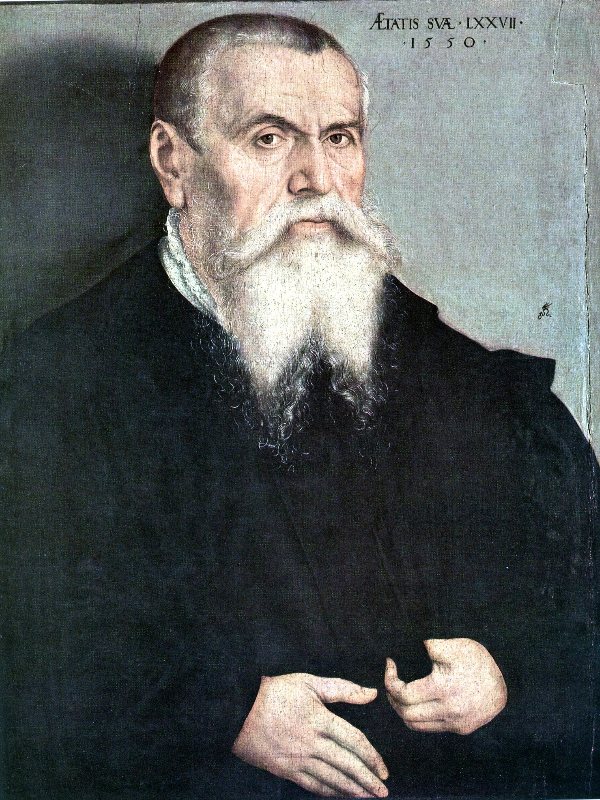
Self-portrait
Self-portrait at the age of 77 years
1550
Oil on board, 64 x 49 cm
Uffizi, Florence.
https://montserrat.sobrevia.net/arxiu_montserrat/museu/img/imgTxtGenerals/autoretrat-S_1_1721.jpg
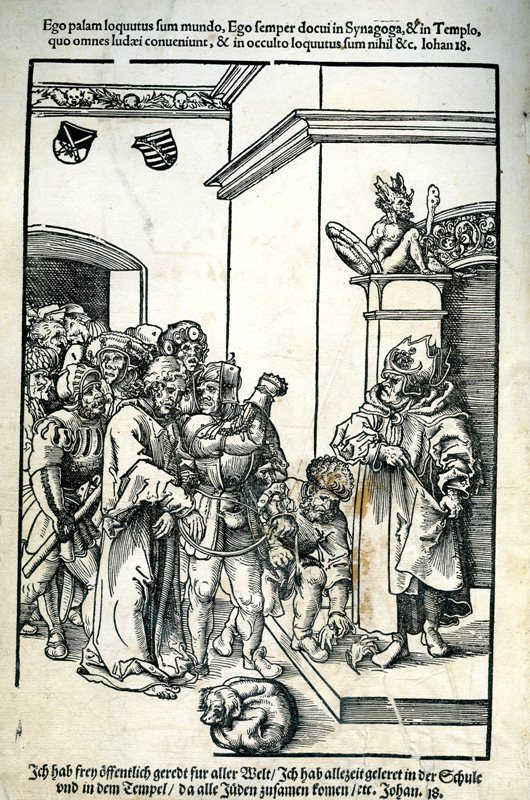
Jesus in front of Annas
"I have spoken freely in front of everyone. And I have always taught in our meeting places and in the temple, where all of our people come together. I have not said anything in secret". (Jn 18:20)
https://montserrat.sobrevia.net/arxiu_montserrat/museu/img/imgTxtGenerals/jasus-davant-danas-S_1_1722.jpg
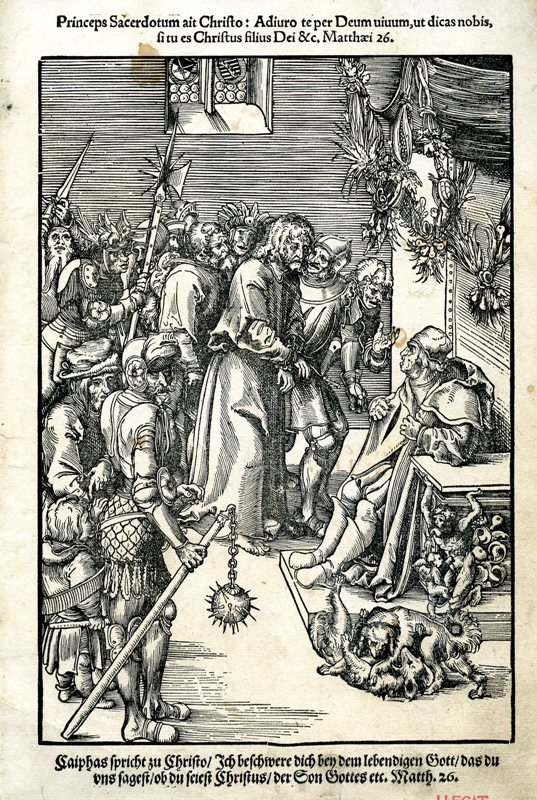
Jesus in front of Caifas
"So the high priest said: -With the living God looking on, you must tell the truth. Tell us, are you the Messiah, the Son of God?" (Mt 26:63)
https://montserrat.sobrevia.net/arxiu_montserrat/museu/img/imgTxtGenerals/jesus-davant-caifas-S_1_1723.jpg
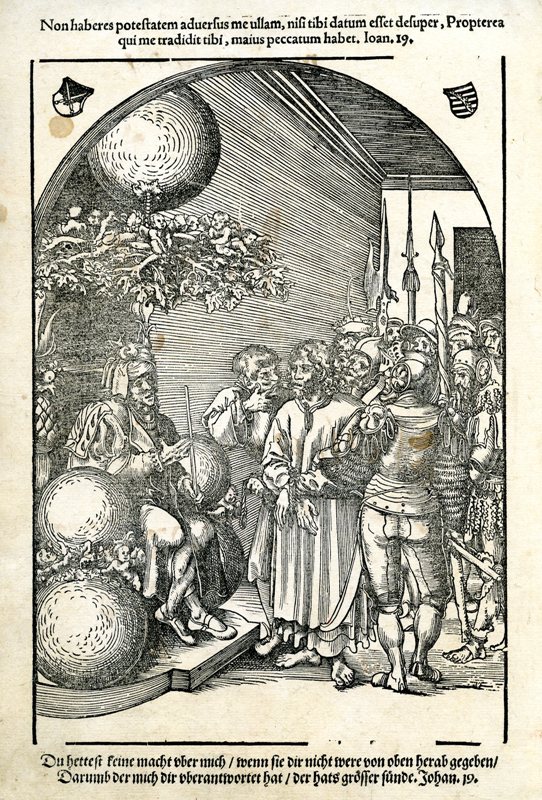
Jesus in front of Pilate
"If God had not given you the power, you couldn't do anything at all to me. But the one who handed me over to you did something even worse". (Jn 19:11)
https://montserrat.sobrevia.net/arxiu_montserrat/museu/img/imgTxtGenerals/jesus-davant-pilat-S_1_1724.jpg
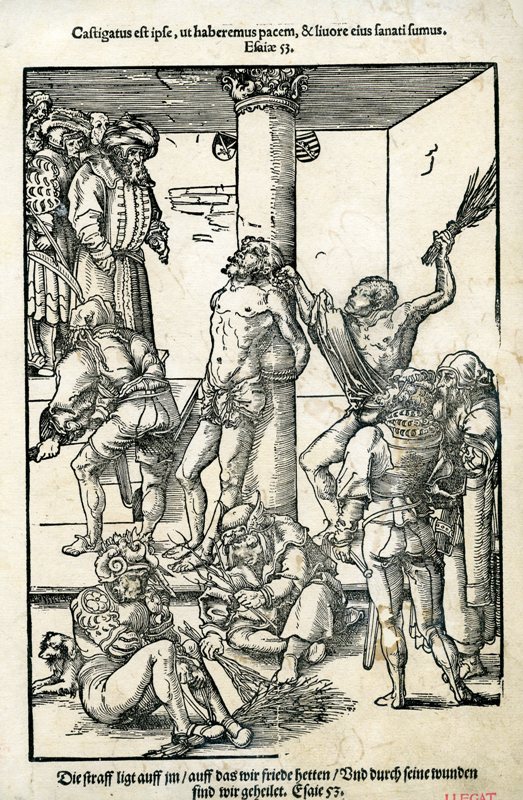
Jesus flagellated
"He was wounded and crushed because of our sins; by taking our punishment, he made us completely well". (Is 53:5)
https://montserrat.sobrevia.net/arxiu_montserrat/museu/img/imgTxtGenerals/jesus-flagellat-S_1_1725.jpg
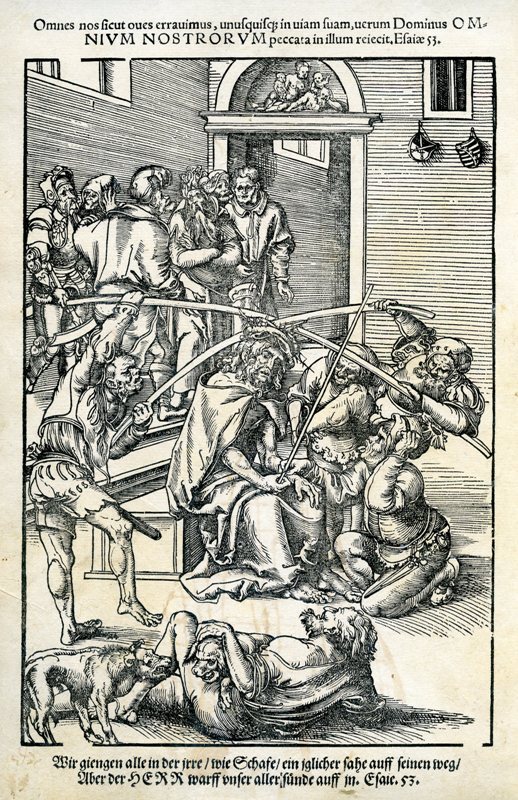
Coronation with thorns
Coronation with thorns: “All of us were like sheep that had wandered off. We had each gone our own way, but the Lord gave him the punishment we deserved” (Is 53:6).
https://montserrat.sobrevia.net/arxiu_montserrat/museu/img/imgTxtGenerals/coronacio-d’espines-S_1_1726.jpg
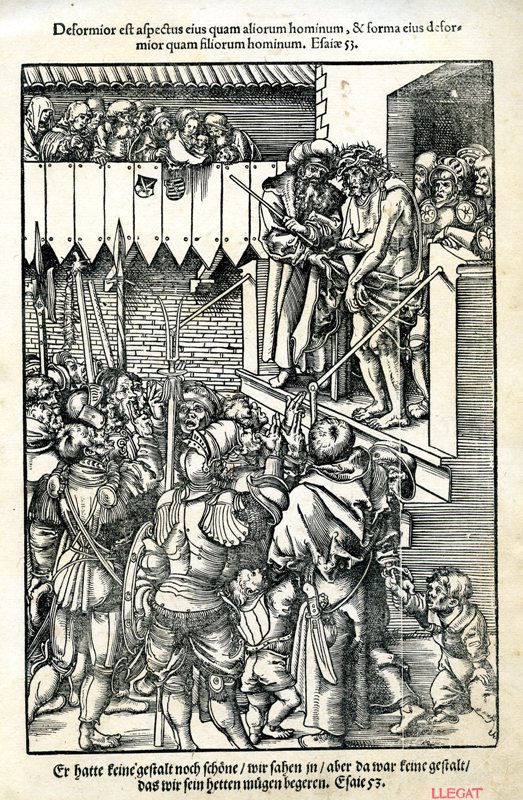
Ecce Homo
"He wasn't some handsome king. Nothing about the way he looked made him attractive to us". (Is 53:2)
https://montserrat.sobrevia.net/arxiu_montserrat/museu/img/imgTxtGenerals/ecce-homo-S_1_1727.jpg
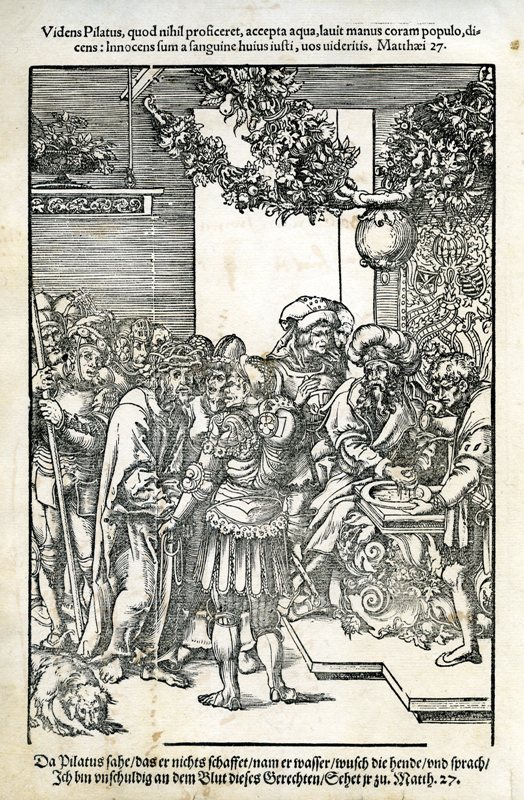
Pilate washes his hands
"Pilate saw that there was nothing he could do. So he took some water and washed his hands in front of them and said: -I won't have anything to do with killing this man. You are the ones doing it!" (Mt 27:24)
https://montserrat.sobrevia.net/arxiu_montserrat/museu/img/imgTxtGenerals/pilat-es-renta-les-mans-S_1_1728.jpg
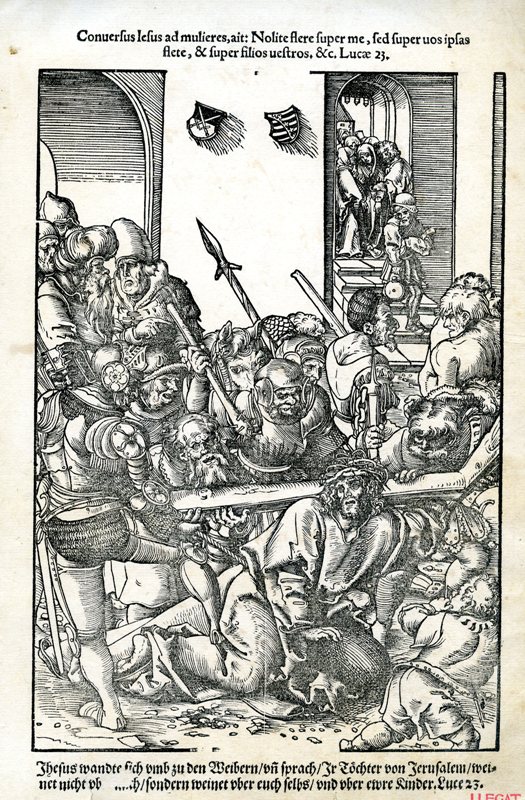
Jesus carries the cross
"Jesus turned to the women and said: -Women of Jerusalem, don't cry for me! Cry for yourselves and for your children". (Lc 23:28)
https://montserrat.sobrevia.net/arxiu_montserrat/museu/img/imgTxtGenerals/jesus-amb-la-creu-a-coll-S_1_1729.jpg
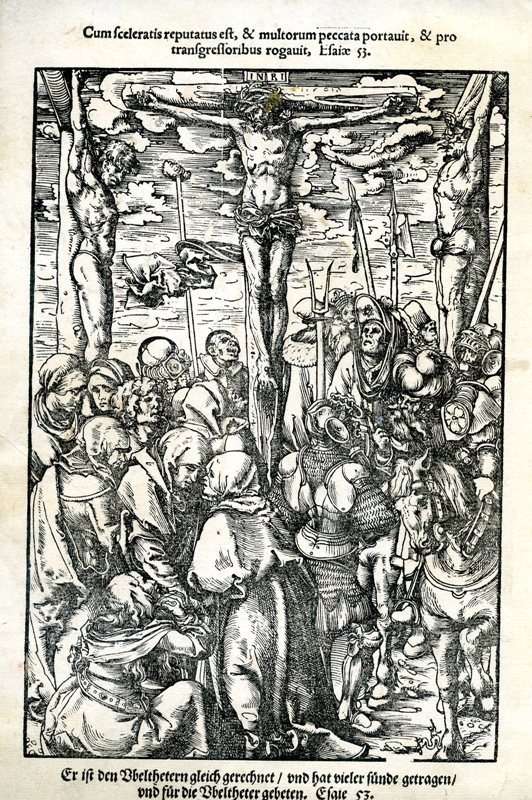
Jesus crucified
"Others thought he was a sinner, but he suffered for our sins and asked God to forgive us". (Is 53:12)
https://montserrat.sobrevia.net/arxiu_montserrat/museu/img/imgTxtGenerals/jesus-clavat-a-la-creu-S_1_1730.jpg
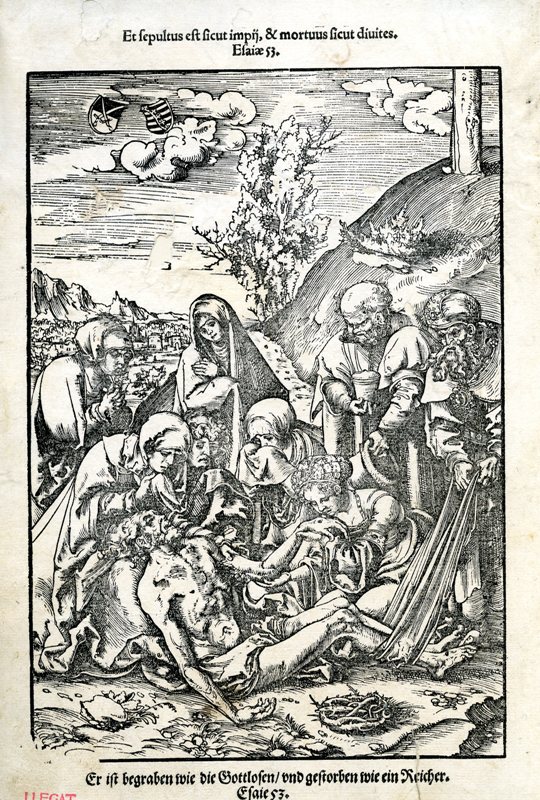
Lament over dead Jesus
"He was buried in a tomb of cruel and wicked people". (Is 53: 9)
https://montserrat.sobrevia.net/arxiu_montserrat/museu/img/imgTxtGenerals/complantes-sobre-jesus-mort-S_1_1731.jpg
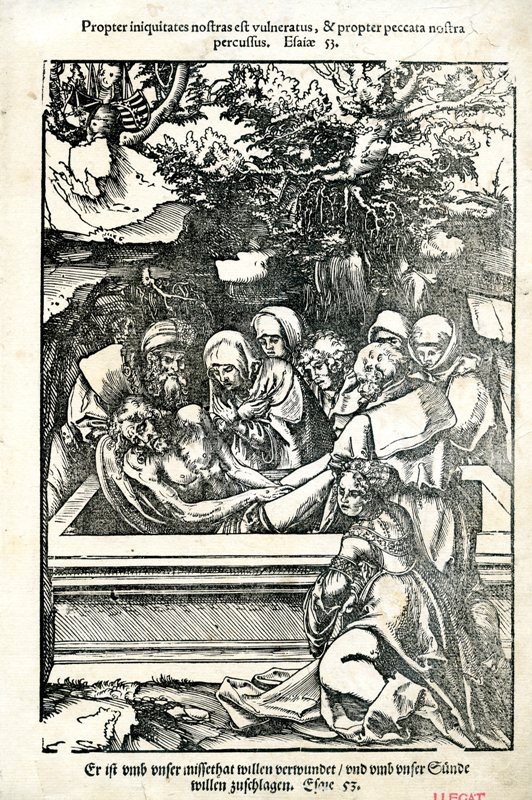
Jesus descended to the grave
“He was wounded and crushed because of our sins; by taking our punishment, he made us completely well”. (Is 53:5)
https://montserrat.sobrevia.net/arxiu_montserrat/museu/img/imgTxtGenerals/deposicio-de-jesus-al-sepulcre-S_1_1732.jpg
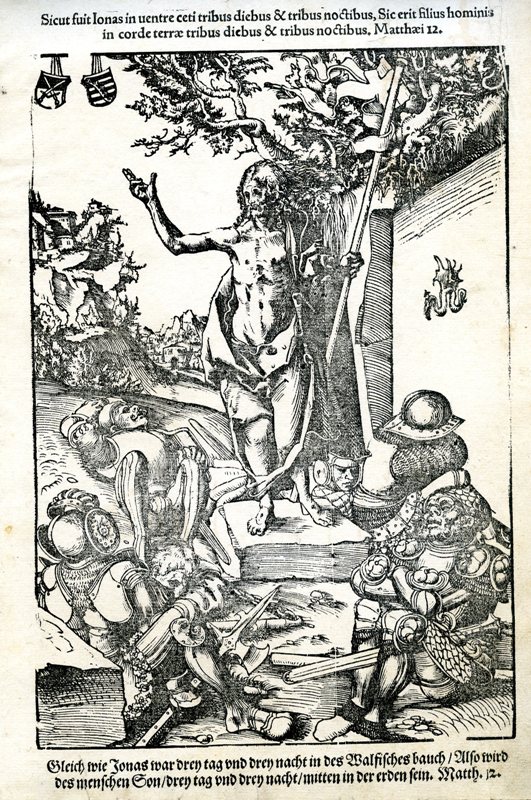
Resurrection of Jesus
“Just like Jonah was in the stomach of a big fish for three days and nights, so the Son of Man will be deep in the earth for three days and nights”. (Mt 12:40)
https://montserrat.sobrevia.net/arxiu_montserrat/museu/img/imgTxtGenerals/resurreccio-de-jesus-S_1_1733.jpg