

Welcome
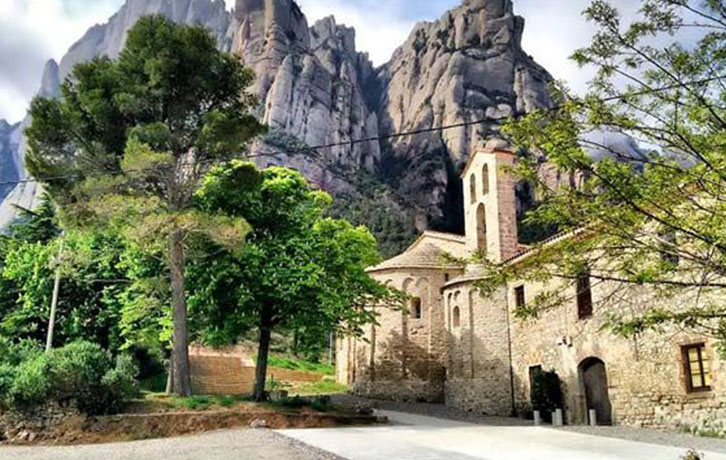
Santa Cecilia de Montserrat is a place imbued with deep spiritual, historical and artistic significance. It was founded more than one thousand years ago, during the creation of Carolingian Catalonia. After the restoration of the Romanesque church by Barcelona Provincial Council (between 2013 and 2015), Sean Scully started to decorate the interior. Thanks to his artistic intervention, the church has become an important example of the intersection between Christianity and genuine avant-garde art.
The Benedictine community of Montserrat wishes you a pleasant and fruitful visit to this emblematic site.
The Building
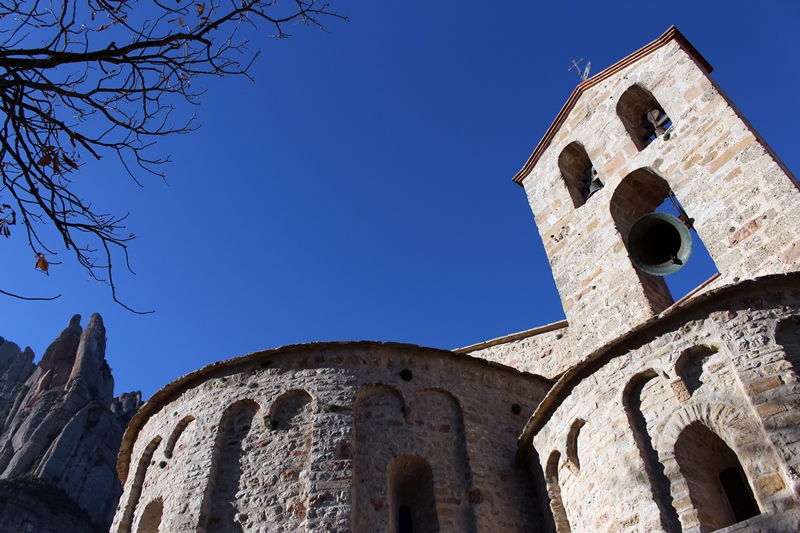
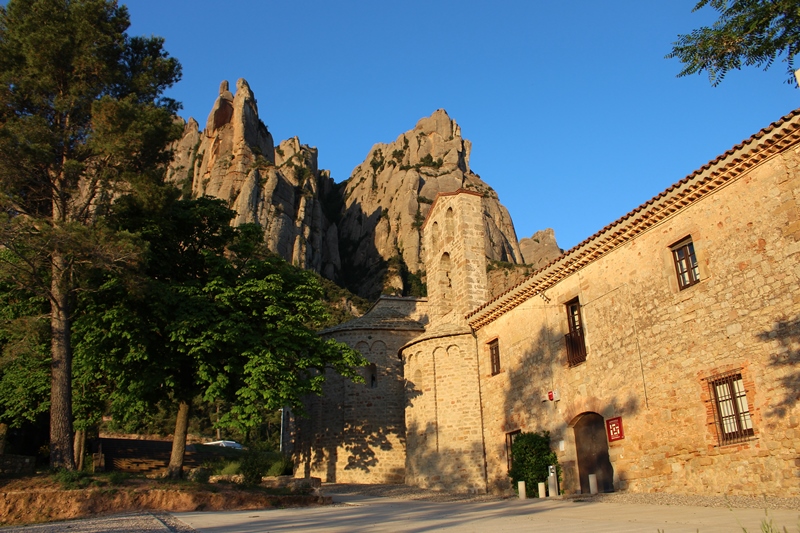
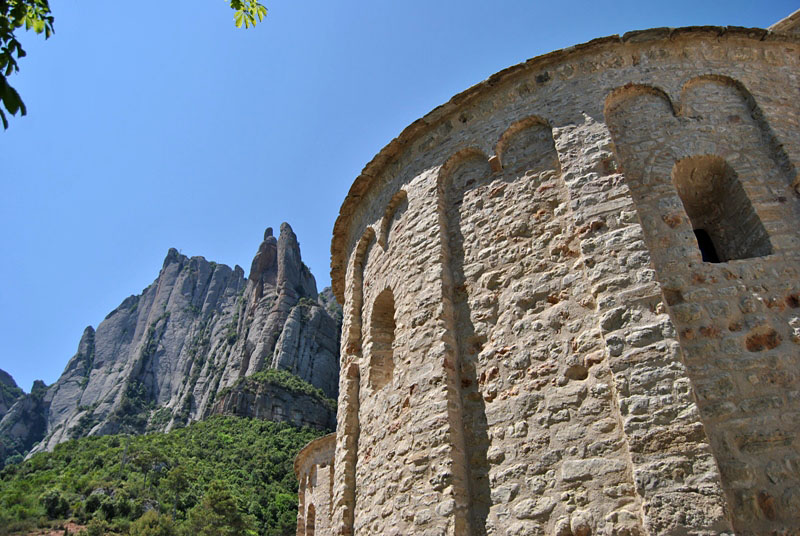
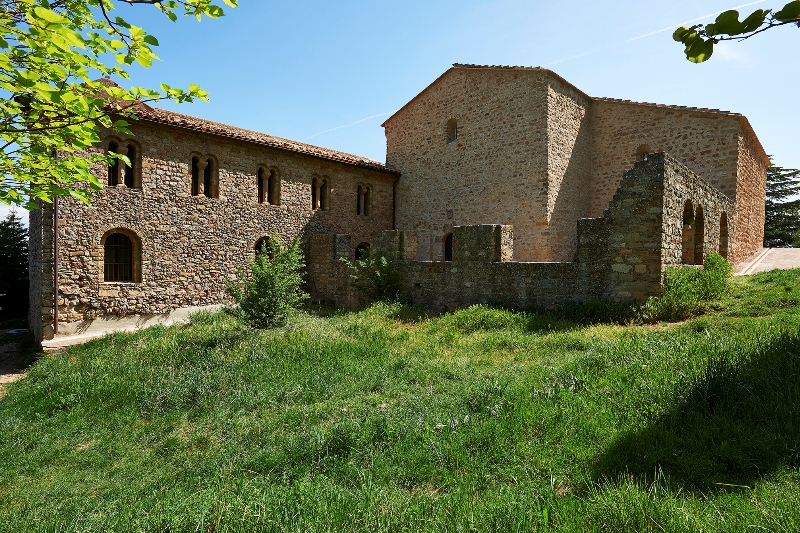
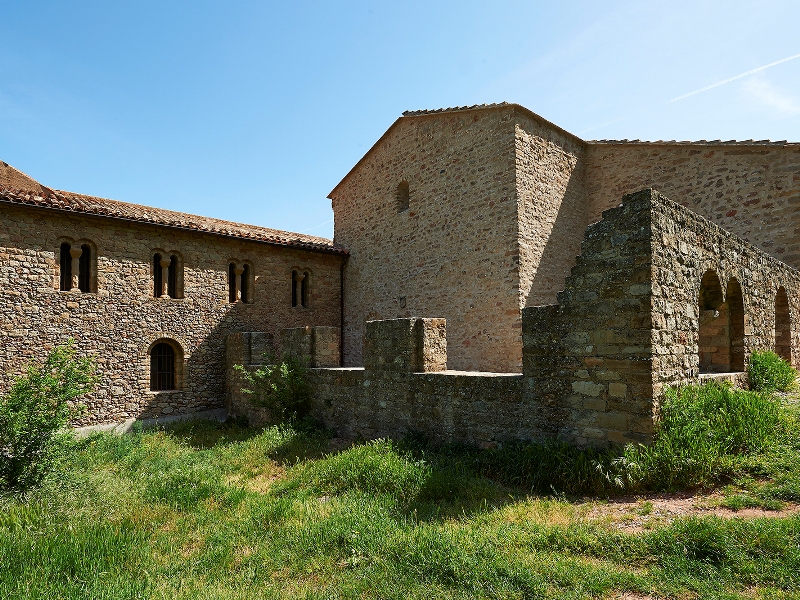
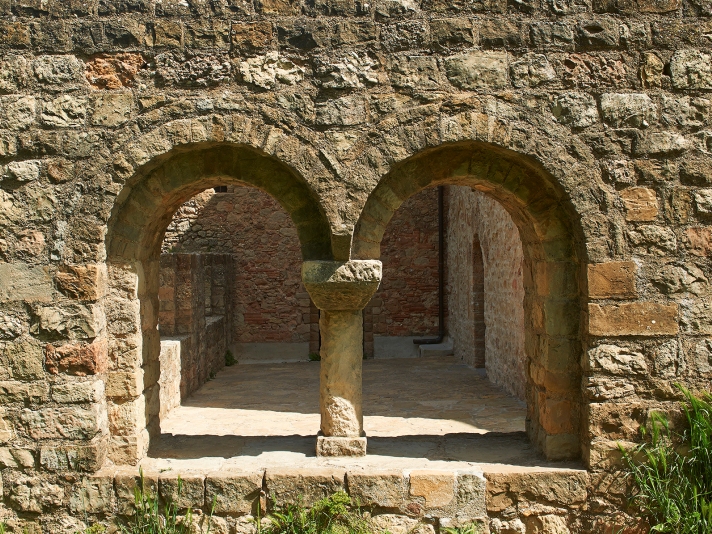
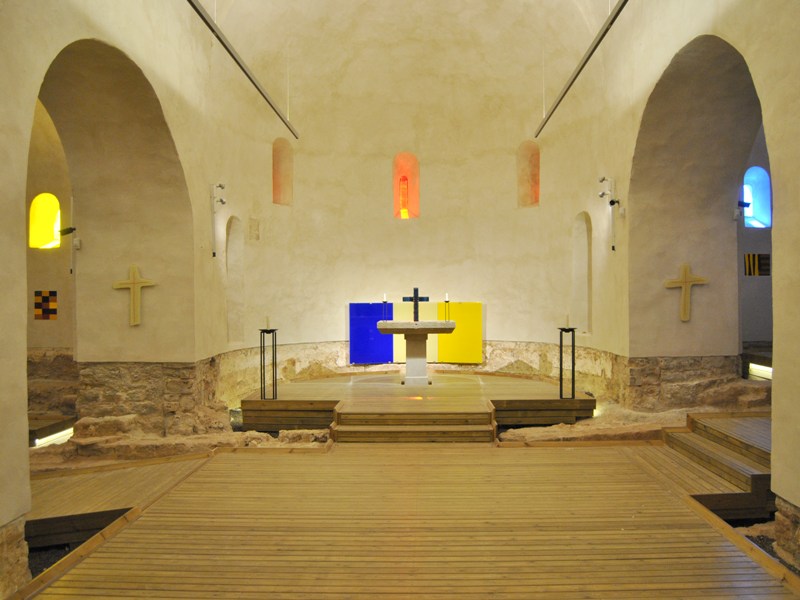
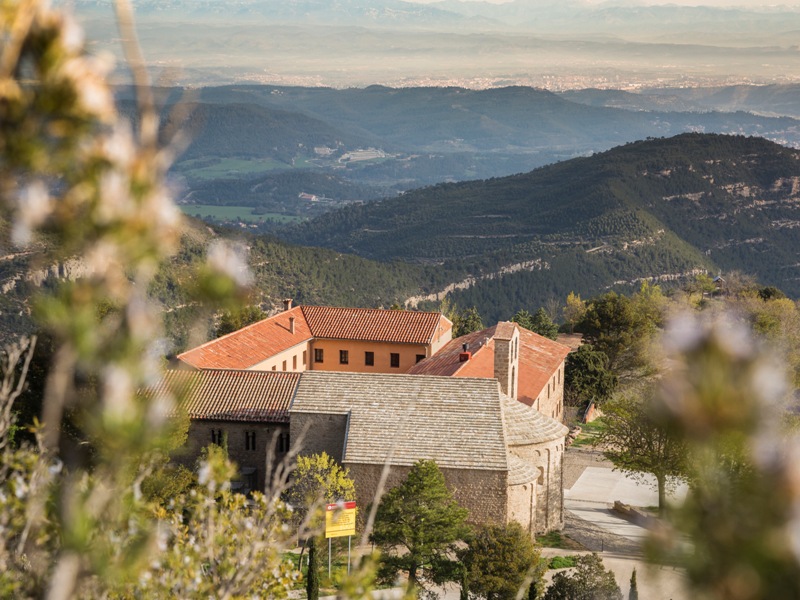
Santa Cecília de Montserrat is a space consecrated through the centuries. Founded in 945 AD, the church barely retains traces of that pre-Romanesque structure. Almost everything we see belongs to the renovations and modifications of the 11th and subsequent centuries. On the exterior, one can admire the three Lombard apses with their characteristic bands and blind arcades. Inside, we enjoy an almost square space, consisting of three naves with the peculiarity that the side naves are shorter than the main one and communicate with each other through two large arches. The difference in level of these naves is explained by the slope of the mountain on which the church is built. This space, austere yet pleasant due to its manageable proportions, enriched by the paintings and stained-glass windows of Sean Scully, has remarkably heightened its qualities as a sacred space, with light filtered by the stained glass—elements that all incline the spirit toward a respectful attitude of quiet silence, serene reflection, and an experience of the sacred.
For eleven uninterrupted centuries, Santa Cecília has been a place of worship, and the artistic intervention of Sean Scully does not alter this function. The Irish painter expressly intended for this space to be a meeting point between secular religious tradition and the most genuine avant-garde art, a function that is perpetuated today with Sean Scully’s artistic creation.
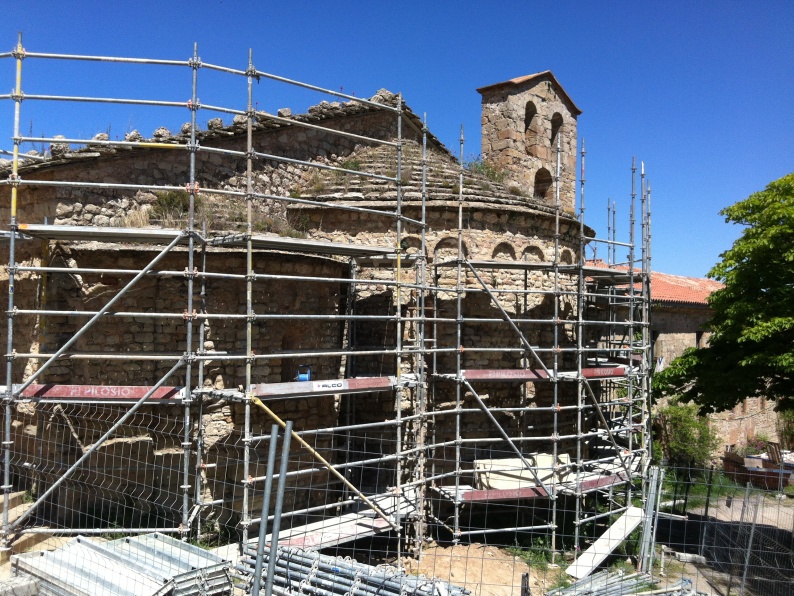
Recent restoration: 2013 to 2015
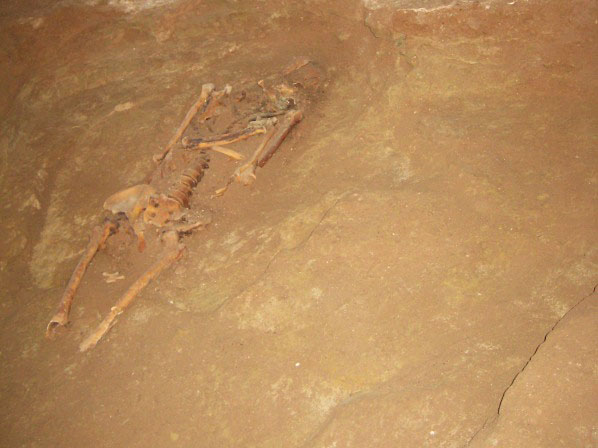
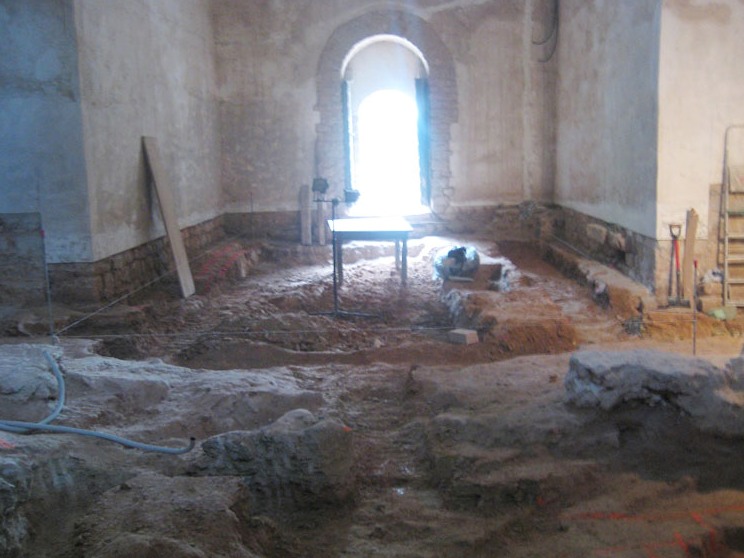
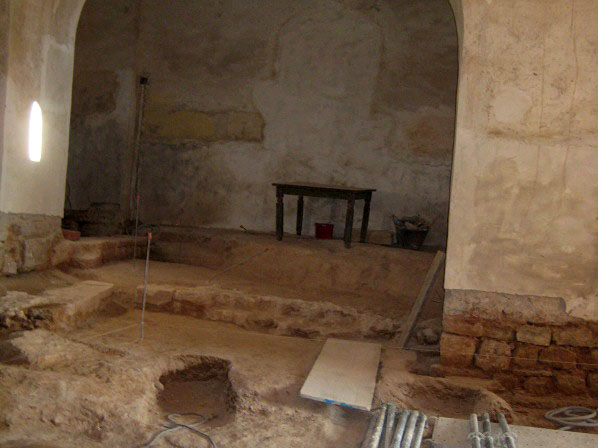
The restoration of the church carried out by the Barcelona Provincial Council during 2013 and 2014, led by Xavier Guitart, brought to light some of the main strata of the church’s history, which can be perceived through the different visible layers at the sides of the floor. The deepest layer of the floor belongs to the church’s foundational and medieval period. The various modifications the building underwent between the 16th and 18th centuries left their mark on alterations to the flooring. The 1863 restoration was the one that most affected the levels, raising the north nave to make it accessible to the first floor of the adjoining house. Recently, the architect Xavier Guitart restored the building to its original level, exposing the different archaeological phases of the building over the centuries.
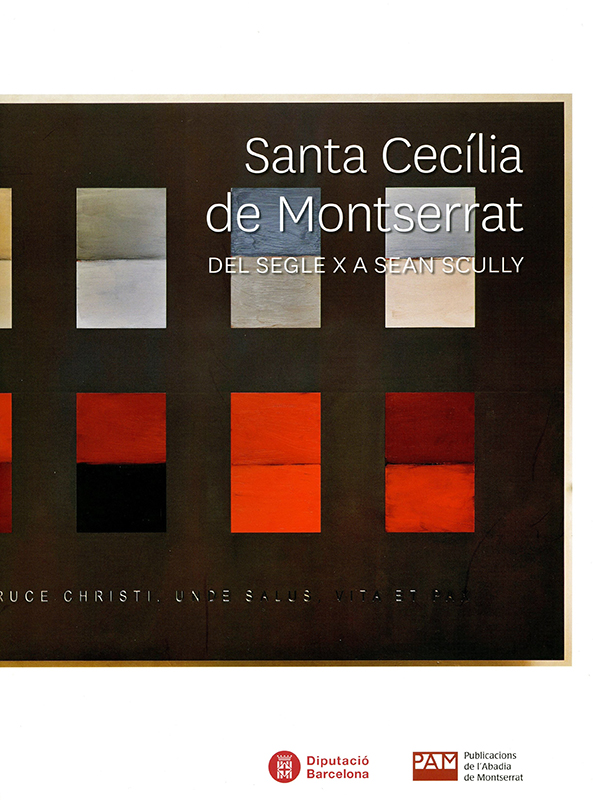
Book
Santa Cecília de Montserrat
From the 10th Century to Sean Scully
Published by: Barcelona Provincial Council and Publicacions de l'Abadia de Montserrat.
Texts by: Josep Maria Soler, Mercè Conesa, Francesc Xavier Altés i Aguiló, Eduard Sánchez, Xavier Guitart Tarrés, Albert Mercadé, Daniel Giralt-Miracle.
Edition in Catalan, with translations into Spanish and English.
Pages: 198.
Dimensions: 21.5 x 29 cm.
BUY THE BOOKSean Scully’s Intervention
The Documentary
This is the documentary we have edited to present Sean Scully’s artistic intervention at Santa Cecília de Montserrat. Written by Albert Mercadé, the video features interviews with the artist himself and with the project’s promoter, the director of the Museum of Montserrat, Josep de C. Laplana. Through their words, we immerse ourselves in the wonder of this space with images that invite peace and silence.
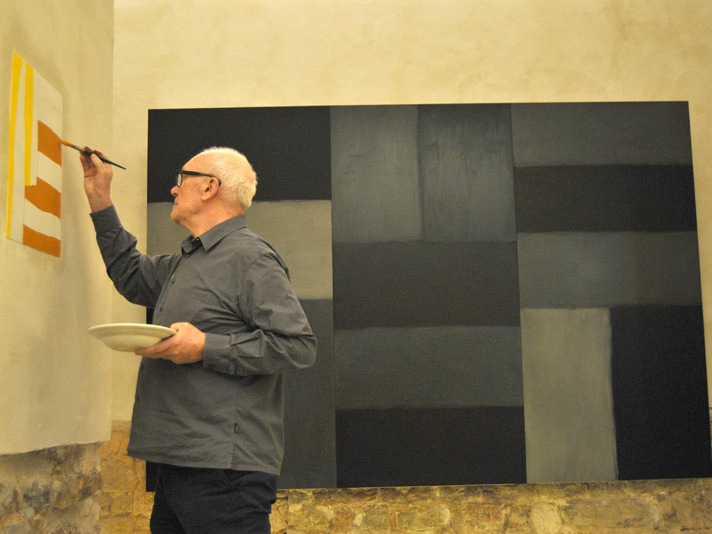
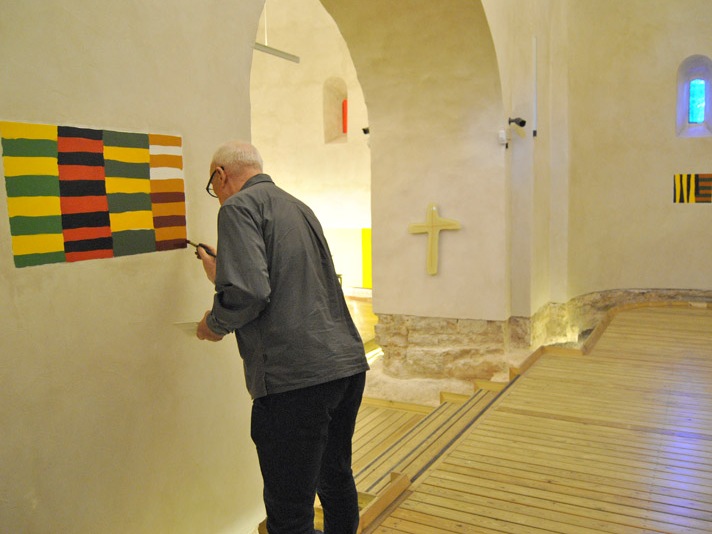
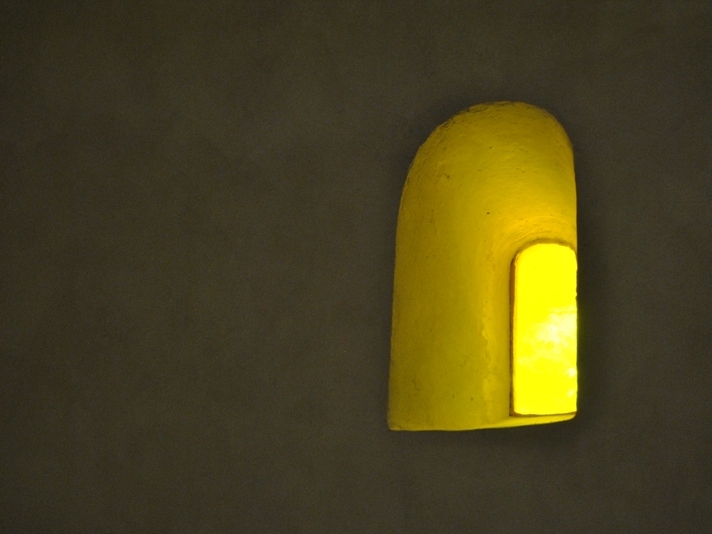
From the very beginning, the painter set out to preserve the sacred atmosphere conducive to contemplation and quiet meditation in this church consecrated over centuries. Moreover, right from the start, the artist decided that the main theme of his intervention in this space should be the Holly series, which he had installed in 2004 at the Kunstverein in Aichach.
This group of work is a personal interpretation of the fourteen stations of the Cross in memory of his mother, Ivy, shortly after her death. Recalling indelible experiences from his childhood, Scully saw himself, when he was only six years old, gazing awestruck at the stations of the Cross in the small church in Highbury, while a heavy hailstorm rattled against the roof. The Holly series was dispersed after the exhibition in Aichach, but Scully recreated it anew—different yet equally intense—for this definitive installation at Montserrat under the name Holly-Stationes.
Sean Scully’s intervention at Santa Cecília de Montserrat expanded over time. In 2012, immediately following the Holly series, the artist painted Cecília, in which he sought to reflect the soul of the church’s patron saint: femininity, music, love, and art. It features a unique tonality and composition within the ensemble: a brighter, more joyful chromatic range and a more complex and intricate compositional layout. Scully takes another approach to the same subject in the second Cecília (Landline Cecília), from 2015, dominated by blues and a warm vermilion suggesting the serene and cheerful spirit of the heroine. The triptych named Doric Nyx (2013) visually recalls Holly and is distinguished by the intense and deep austerity of its color palette, evoking a balanced and virile character. Yet another smaller triptych, from 2014, is a harmonious melody of diverse blues softly combined to produce a sweet, dreamy effect. In all cases, the technique used is oil on aluminum or copper, and some of the pieces are impressive in their large dimensions. The final painting the artist added to the collection is an oil on canvas entitled Barcelona Wall of Light Pink (2013).
Sean Scully’s artistic contribution is further complemented by eight stained-glass windows in various colors (wine red, golden ochre, sea blue) enclosing the church’s eight embrasures. These three colors are very common in Sean Scully’s painting. The artist designed the stained glass and noted with great satisfaction the effect of his favorite colors when natural light passes through them, spontaneously producing iridescences that paint alone cannot achieve; it is as if, with the changing light throughout the day, they take on a life of their own.
For the first time in his long painting career, Sean Scully painted three frescoes in the church of Santa Cecília, adhering strictly to this ancient technique. They are compositions of layers and bars – very much in the Scully style – small-scale interventions that add warmth and contrast with the large-scale pieces filling the walls of the church.
Finally, Scully contributed three exquisite glass crosses for the altar and side walls, as well as a colored-glass retable altarpiece and four candlesticks. Together, it forms an artistic symphony that will marvel all who view the new church of Santa Cecília.
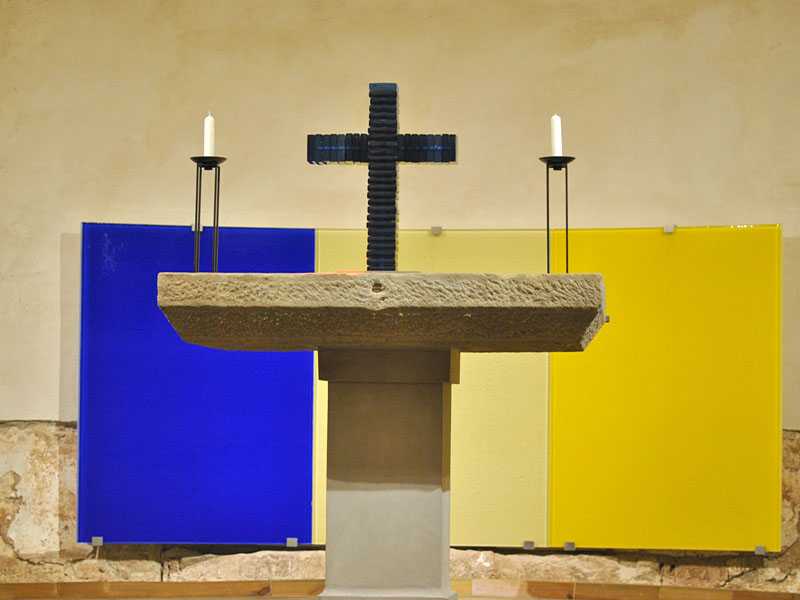
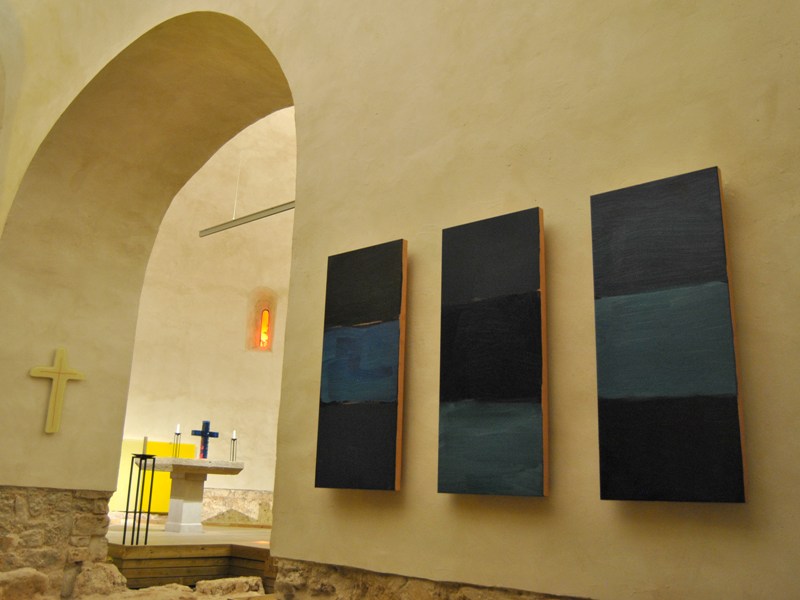
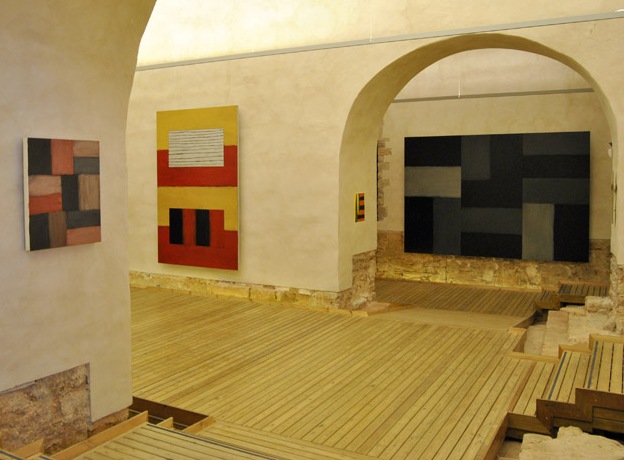
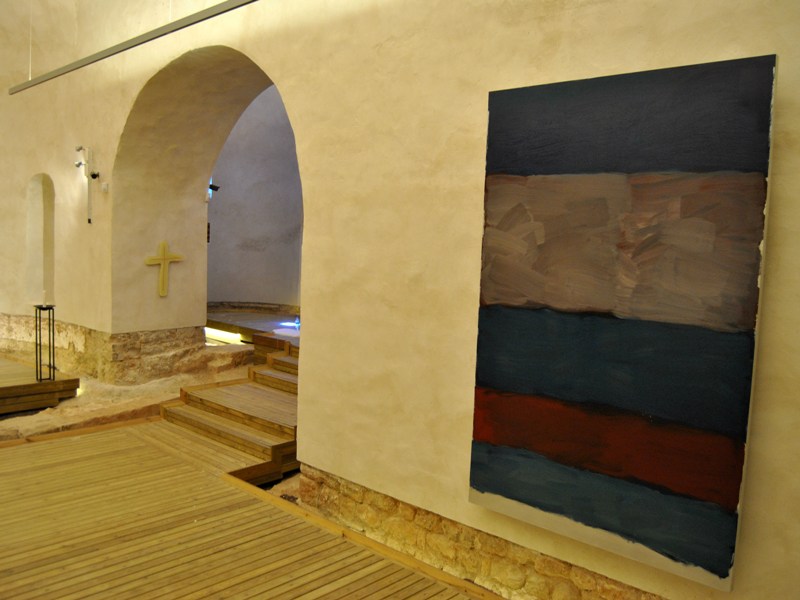
Photos: © Raül Maigí / Museu de Montserrat
The Inauguration
On June 30, 2015, the new Sean Scully Space of Art was inaugurated at the church of Santa Cecília de Montserrat. This marked the culmination of a decade-long process since the first meeting between the artist and the director of the Museum of Montserrat, Josep de C. Laplana. We explain it all in this video.
A Privileged Environment
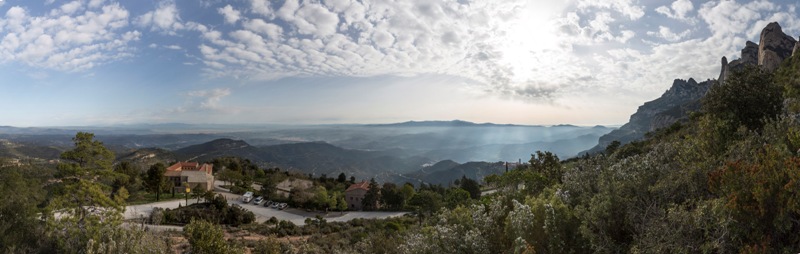
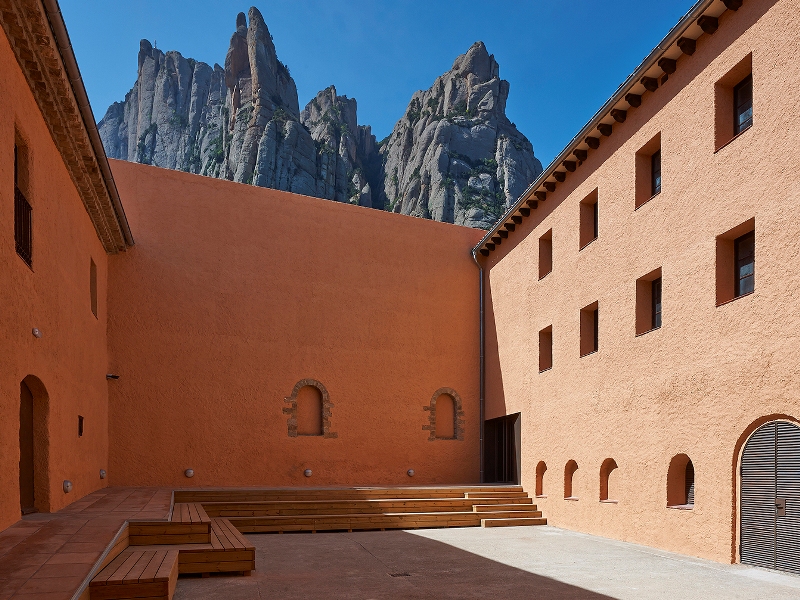
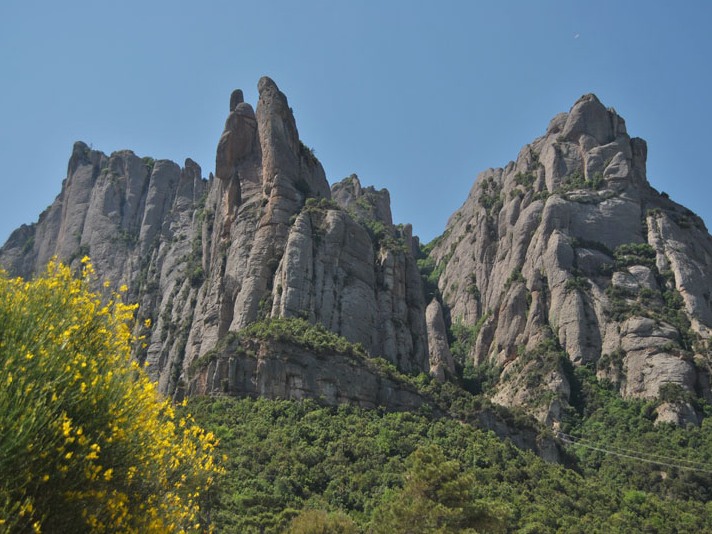
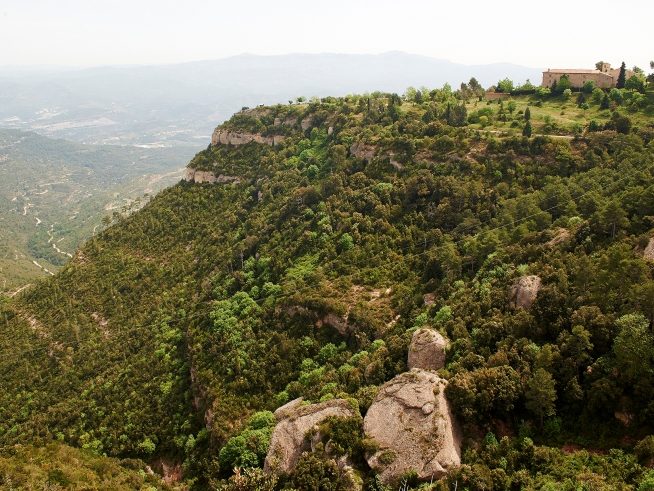
The former monastery of Santa Cecília de Montserrat is located on the northern slope of the massif, at an altitude of 675 meters, and at the very foot of the wall of Sant Jeroni. It is a privileged location as it has the highest and most iconic cliffs of the mountain as a backdrop on its southern side. The peak of Sant Jeroni (1,235 m) is the highest summit of the entire range. On the eastern side rises the imposing Cavall Bernat (1,110 m), shaped like an isolated menhir. We can admire the silhouette of the Paret dels Diables and Els Patriarques, and the Serrat del Moro can also be glimpsed, where a rescue helipad is located. Directly ahead are the spectacular figures of Sant Benet and Santa Escolàstica. Further beyond, Les Talaies and Coll de Migdia can still be seen. The various rock gullies generate natural springs, one of which bears the name of Santa Cecília and is fed by rainwater.
The surrounding area is very attractive, as the northern face of the mountain, being shady and humid, creates dense and lush vegetation. The site lies on a gentle slope of the range, on a natural terrace that, facing northeast, offers extraordinary views of the neighboring valleys and the Pyrenees, especially on clear days.
The rock faces forming the front wall of Santa Cecília offer several climbing routes and are a favored spot for climbers. The site is also a common starting point for many hiking enthusiasts.
The building belongs to the municipality of Marganell and is located alongside the BP-1103 road, which connects the Abbey of Montserrat with the A2 highway via Can Maçana.
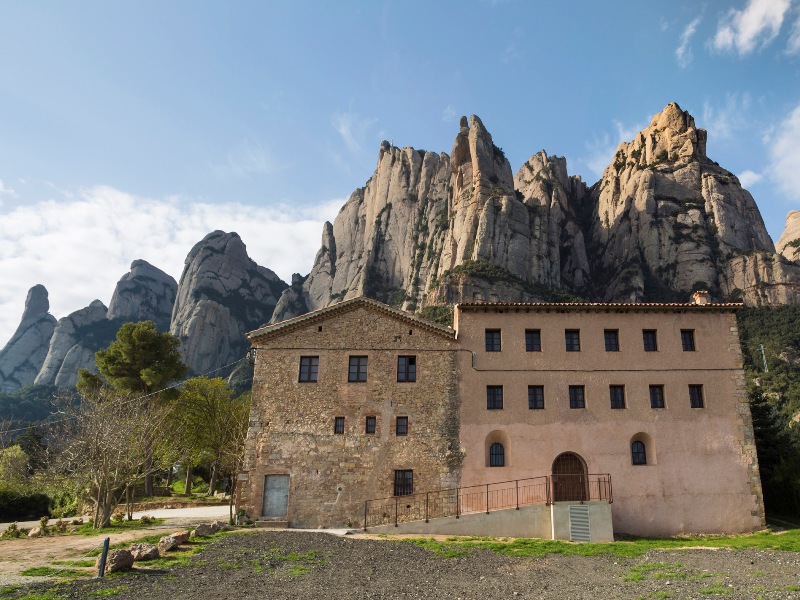
© Photos: Ula Serra / Dani Rovira / Museu de Montserrat