

The Origins
9th century AD. The territory, lost during the Arab invasion in 716, was reconquered and repopulated within the framework of the structuring of Carolingian Catalonia.
Around 900. The church of Santa Cecília de Montserrat is mentioned for the first time, located near Marro Castle, an indigenous place name of pre-Roman origin. No trace remains of this castle, and everything suggests it was a watchtower and defense for this church and the entire Marganell valley, the nearest town.
942. The priest Cesari purchases the domain of Marro Castle and the church of Santa Cecília from his aunt Druda and his cousin Ansulf for ten gold ounces.
945. On June 24, Bishop Jordi of Vic signs the founding charter of the Benedictine monastery of Santa Cecília de Montserrat, governed by Abbot Cesari with the approval of Count Sunyer and Countess Riquilda of Barcelona. Countess Riquilda was a great protector of Cesari and his monastery.
957. Guadamir, Bishop of Vic, consecrates the church of Santa Cecília de Montserrat —which Abbot Cesari had restored— with its three altars dedicated to Saint Mary, Saint Cecilia, and Saint Peter.
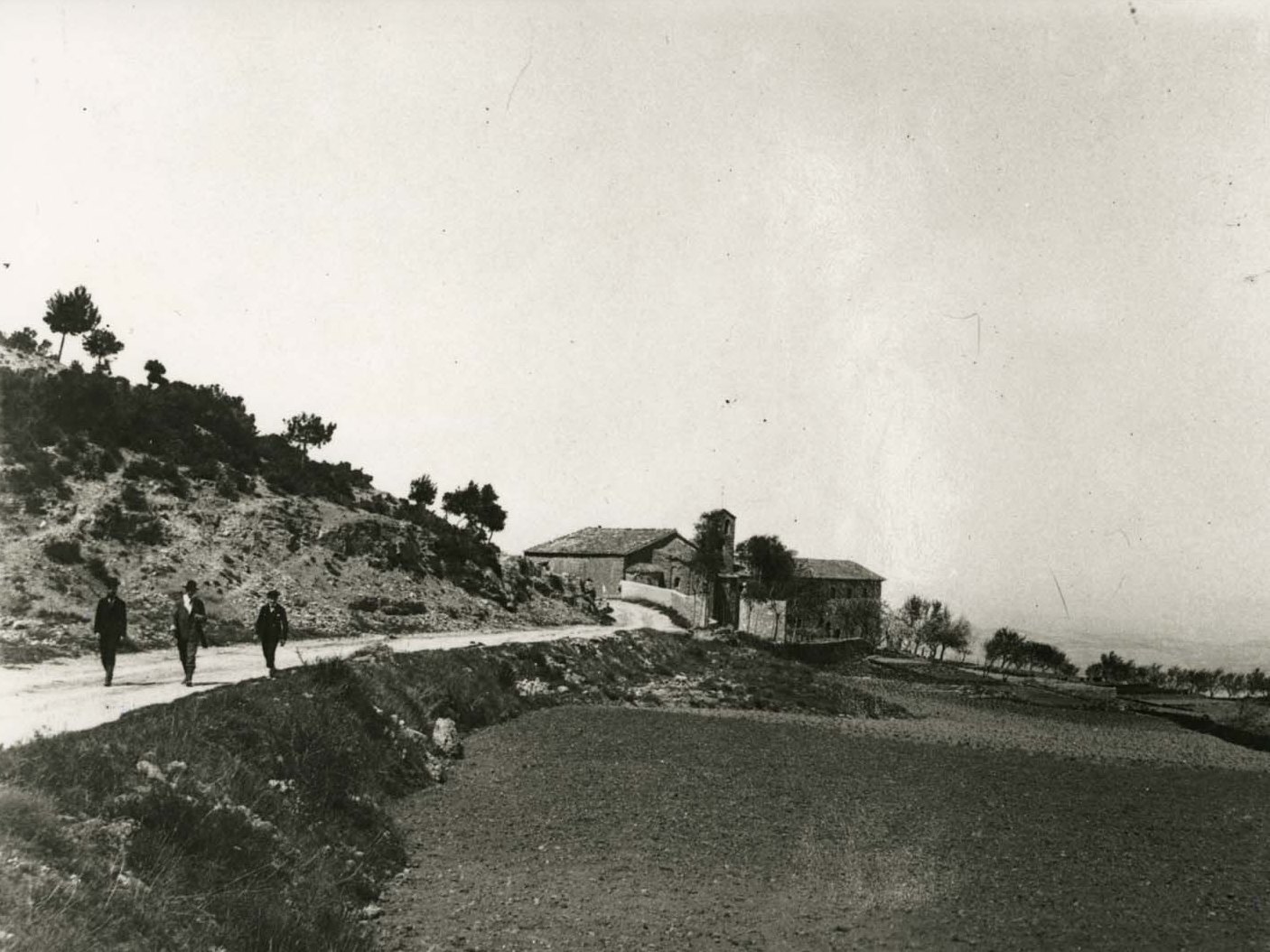
From the Middle Ages to the 20th Century
Around 1025. Oliba, Abbot of Ripoll and Bishop of Vic, dispatched a group of monks from Ripoll to the church of Santa Maria de Montserrat. In this way, a second monastic community was established on the same mountain. The monks of Santa Cecília had been there for seventy-five years and enjoyed independence and the abbotial title, whereas those of Santa Maria formed a simple priory dependent on Ripoll. Throughout the Middle Ages, both monasteries coexisted separately and peacefully. During the first half of the 11th century, likely coinciding with the construction of the Romanesque church of Santa Maria de Montserrat, the old church of Santa Cecília was also transformed into the Romanesque style, adding the new apse headland with two absidioles, blind arcades, and Lombard bands. Later, they thickened the walls and replaced the timber-framed roof with barrel vaults.
While the neighboring monastery of Santa Maria de Montserrat grew, mainly due to the huge influx of pilgrims drawn by the holy image, Santa Cecília struggled to survive. The decline of Santa Cecília de Montserrat became evident when its main task became parish work, and the monastery became a stopping place and inn for pilgrims heading to Santa Maria de Montserrat.
The decline of the monastery of Santa Cecília de Montserrat hit rock bottom when the appointed abbots were no longer monks, but external clerics who held the title and collected the monastery’s revenues.
1537. Pope Julius II, who had been commendatory abbot of Santa Maria de Montserrat, issued a decree perpetually attaching the monastery of Santa Cecília to that of Montserrat. From that point onward, only a single priest lived at Santa Cecília, performing the duties of a parish priest.
1811. General Suchet orders the destruction of Montserrat, which had become a symbol of resistance against the Napoleonic invasion. On that occasion, he also devastates the church of Santa Cecília de Montserrat.
1866. Having overcome the laws of disamortization and suppression of religious orders, the Abbot of Montserrat, Miquel Muntadas (1809-1885), commissioned the architect Francesc de Paula Villar Lozano (1828-1903) with the restoration of Santa Cecília. He repaired the severe damage to the building and corrected the centuries-long disfigurement of the church. He rebuilt the left absidiole, walled up the spurious door that had been opened in the central apse, and made the original entrance door usable again. Even so, the exterior and the overall ensemble of Santa Cecília continued to look like an abandoned building. This defect was corrected by Puig i Cadafalch’s restoration in 1928-1931.
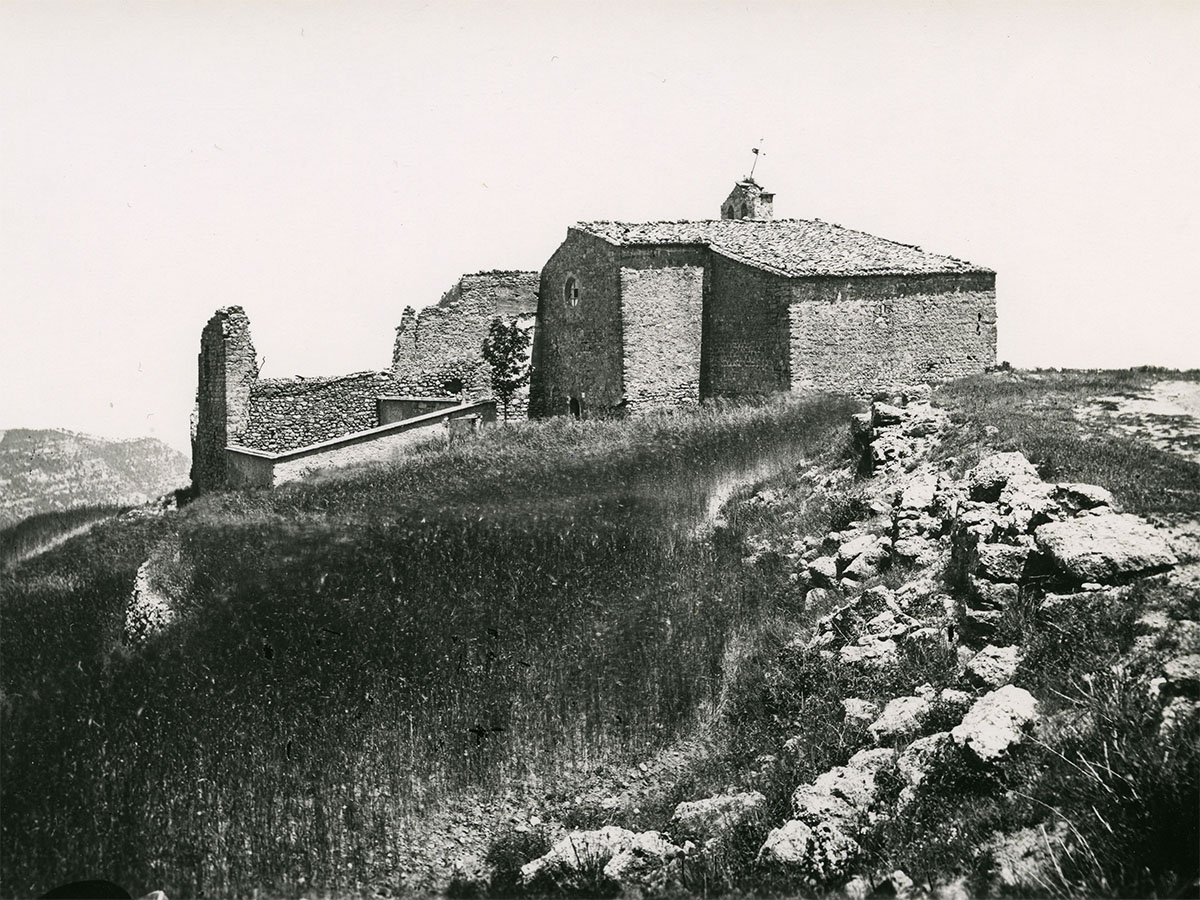
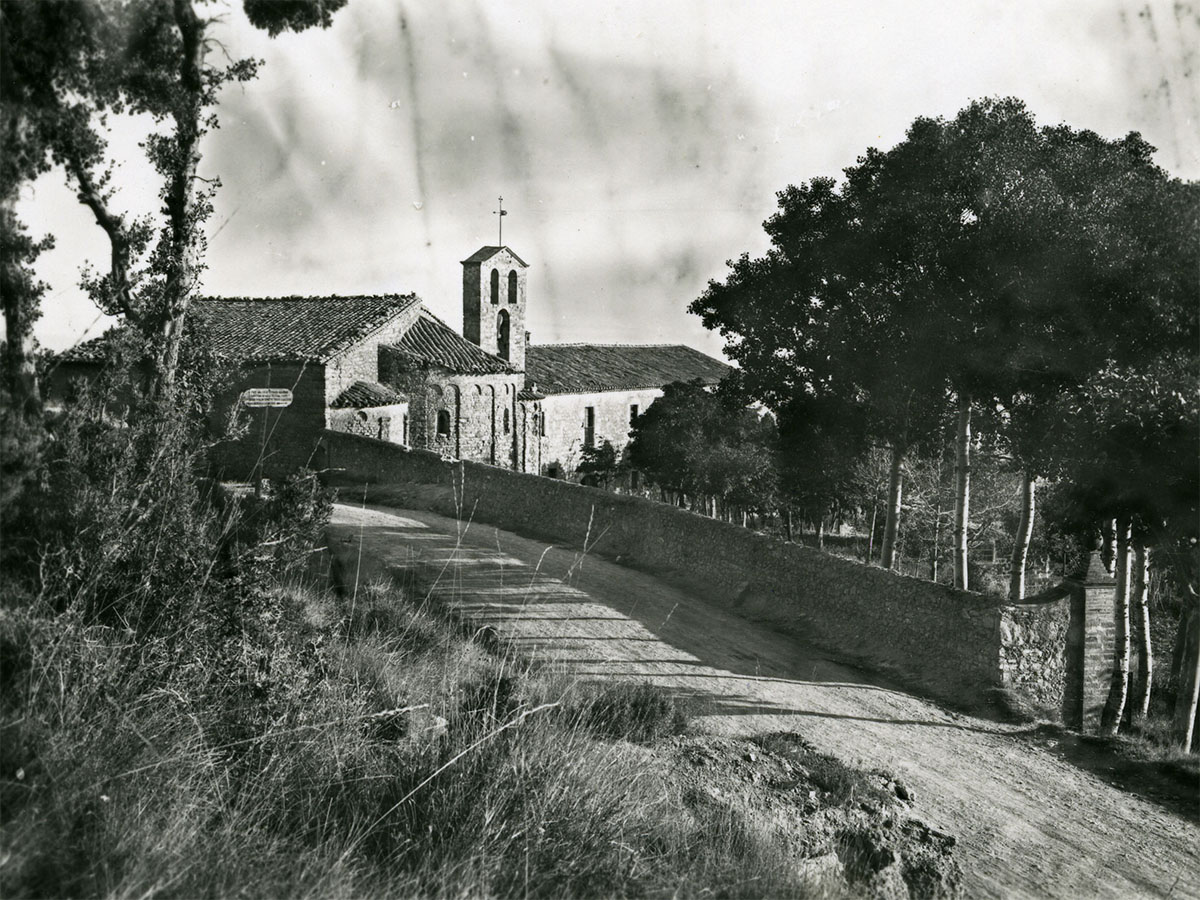
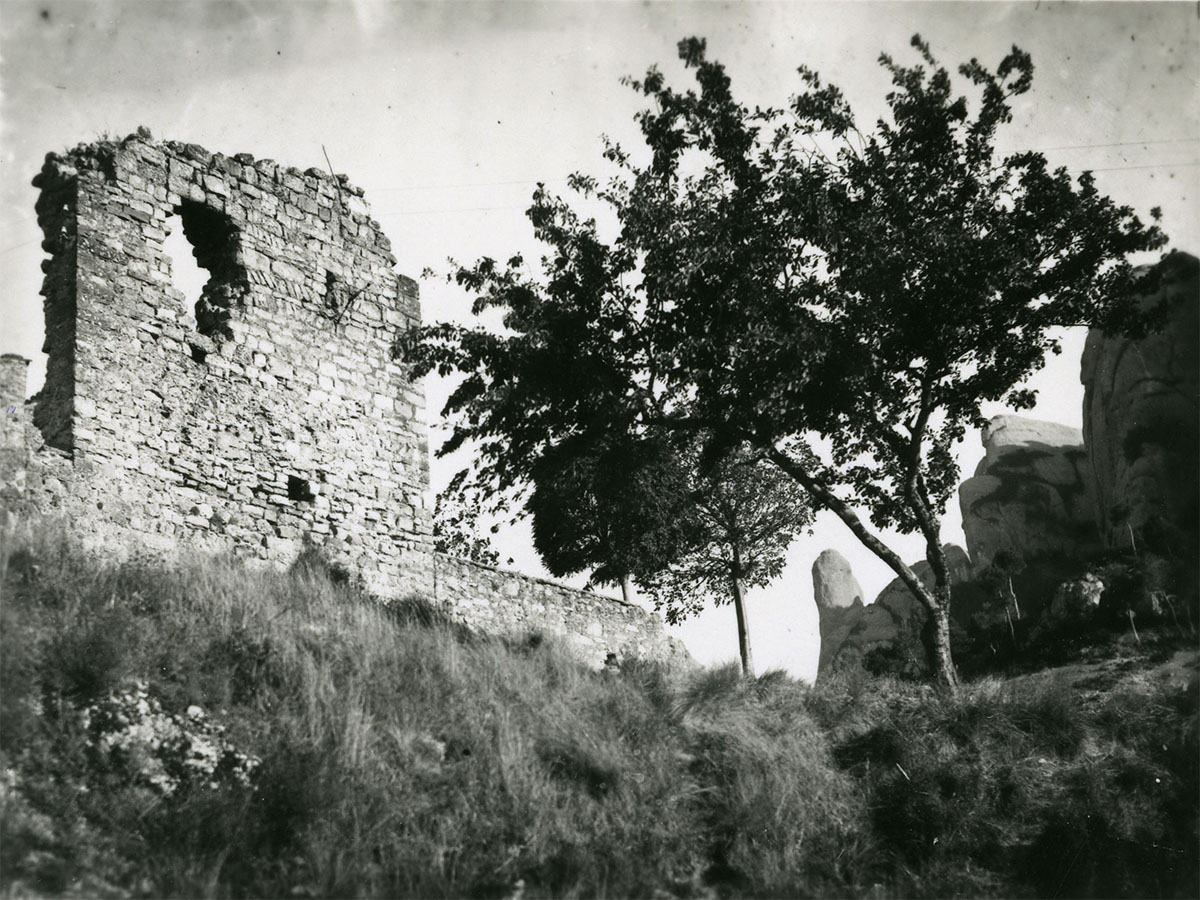
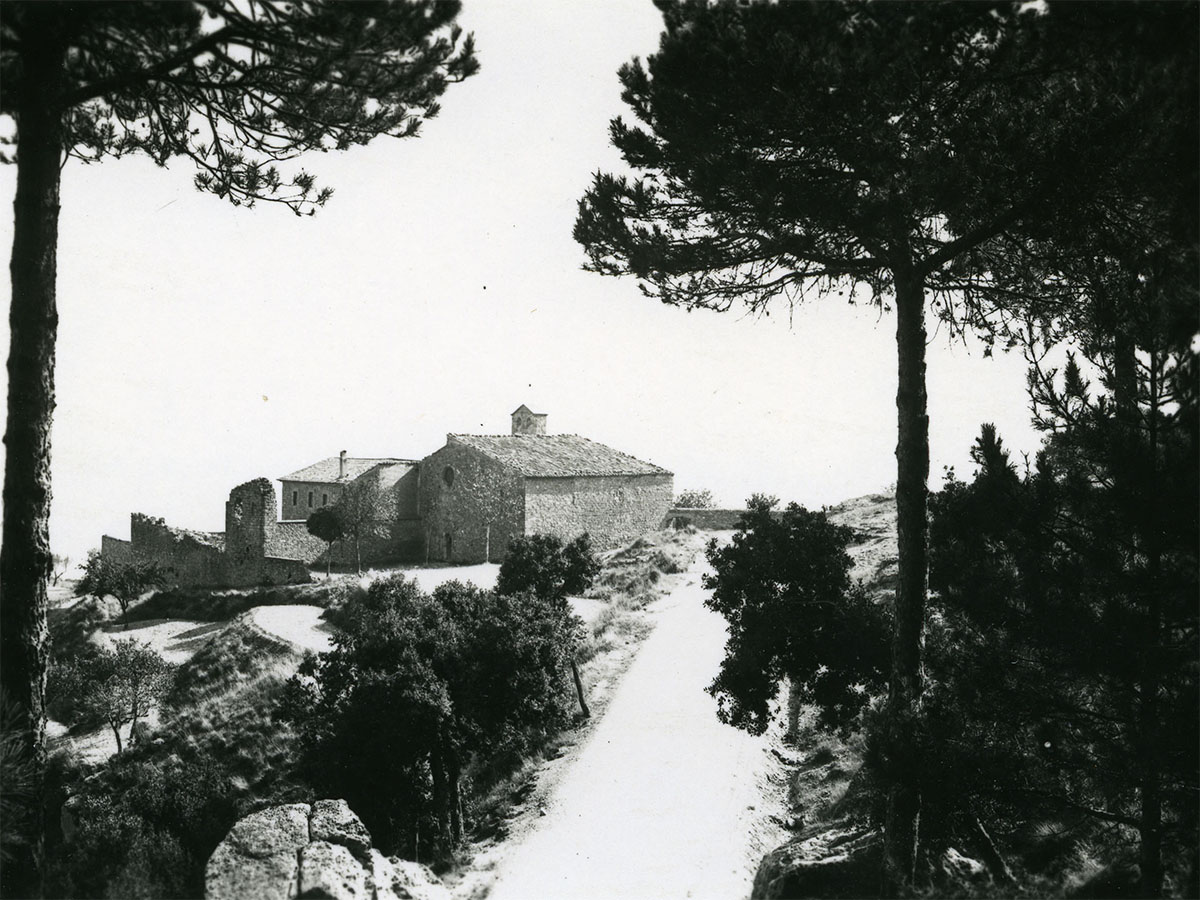
Santa Cecília at the end of the 19th century
The Restoration by Puig i Cadafalch
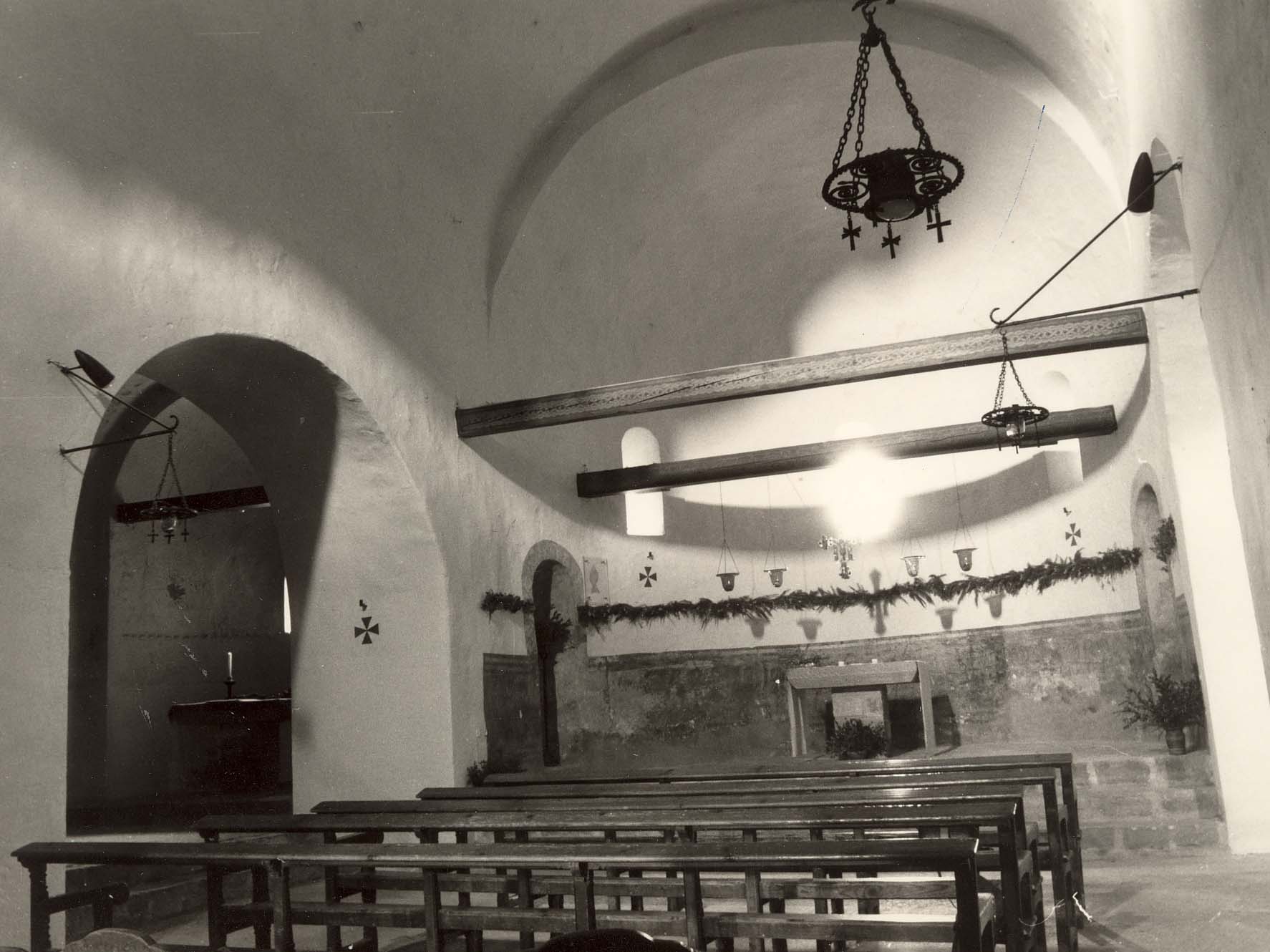
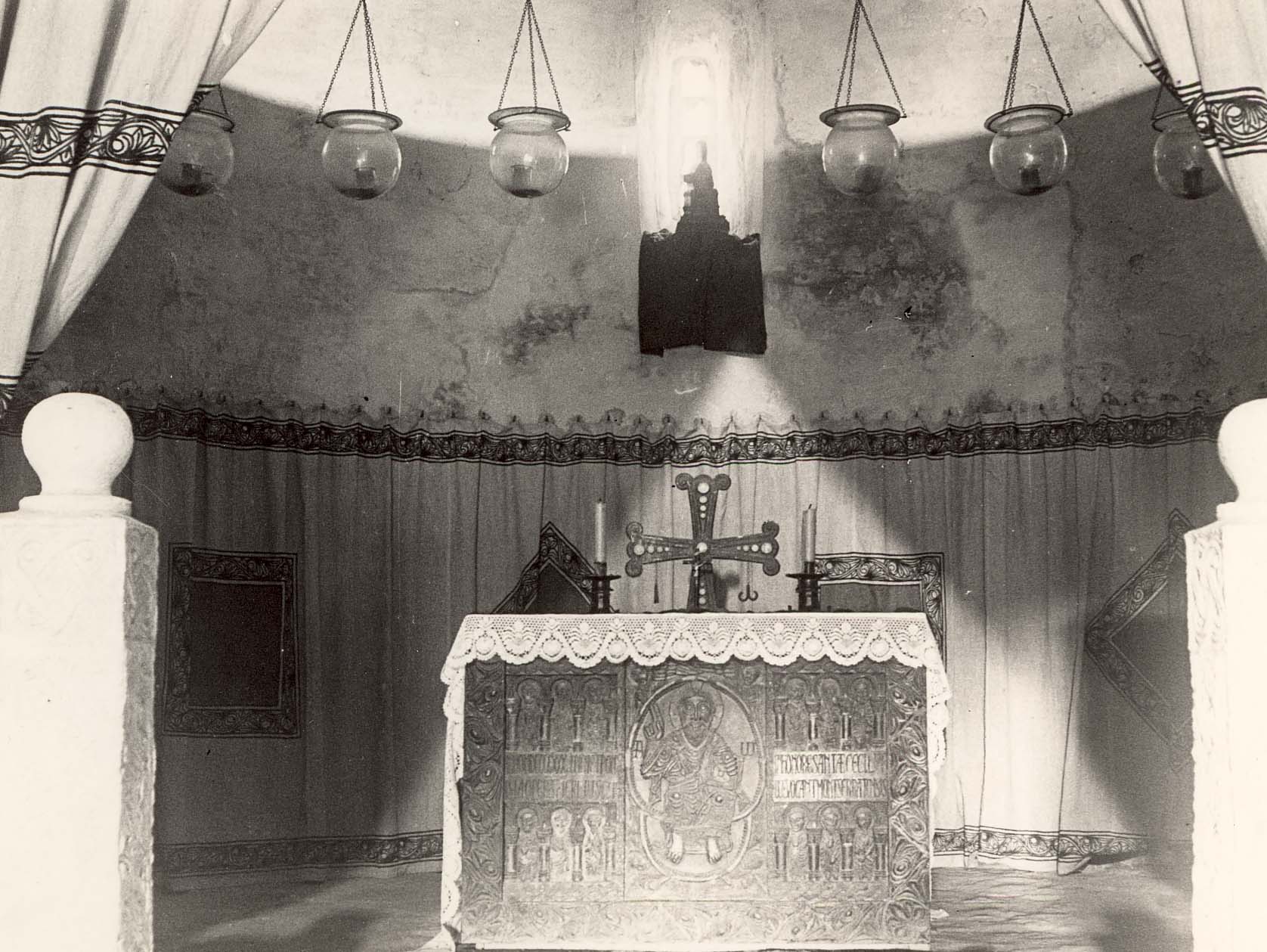
1928. The distinguished historian and architect Josep Puig i Cadafalch (1867-1956) restored the Romanesque church of Santa Cecília de Montserrat. He did so using historicist criteria, imagining what its interior must have looked like according to the liturgy. The three altars of the three apses, when there was no celebration, remained hidden behind curtains hanging from three wooden beams, and the central altar featured a metallic frontal inspired by the lintel of Sant Genís de Fontanes (Roussillon), with a votive inscription by the politician Josep Pich i Pon, who funded those works.
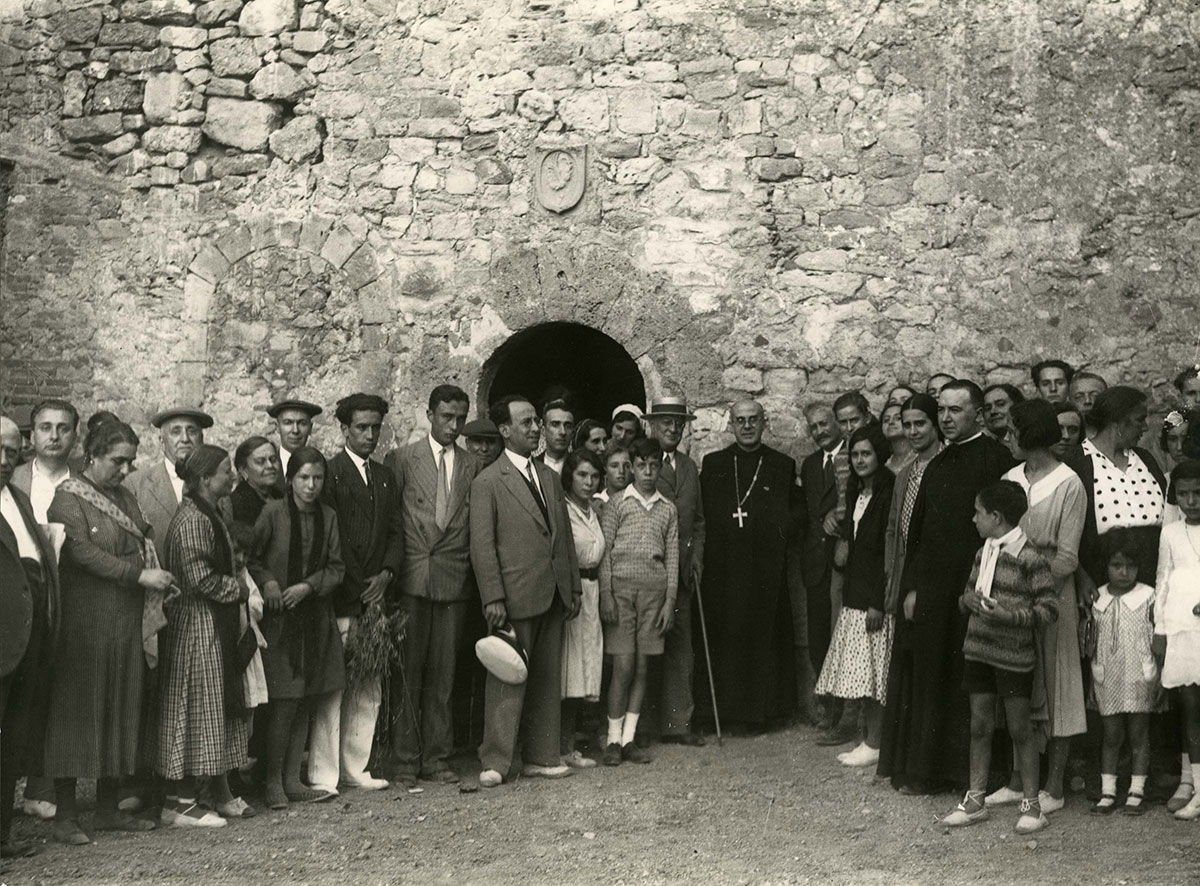
1931. The inaugural ceremony for the restoration of Santa Cecília de Montserrat took place on August 30, presided over by Abbot Antoni M. Marcet and the architect Josep Puig i Cadafalch.
1940. After the end of the Spanish Civil War, two communities of Benedictine nuns from Mataró and Santa Clara in Barcelona settled at Santa Cecília de Montserrat. They merged into a single community, the current Sant Benet de Montserrat, which resided at Santa Cecília until 1954.
1954-2000. During these fifty years, the community of Montserrat used Santa Cecília to host groups and retreats, especially for young people.
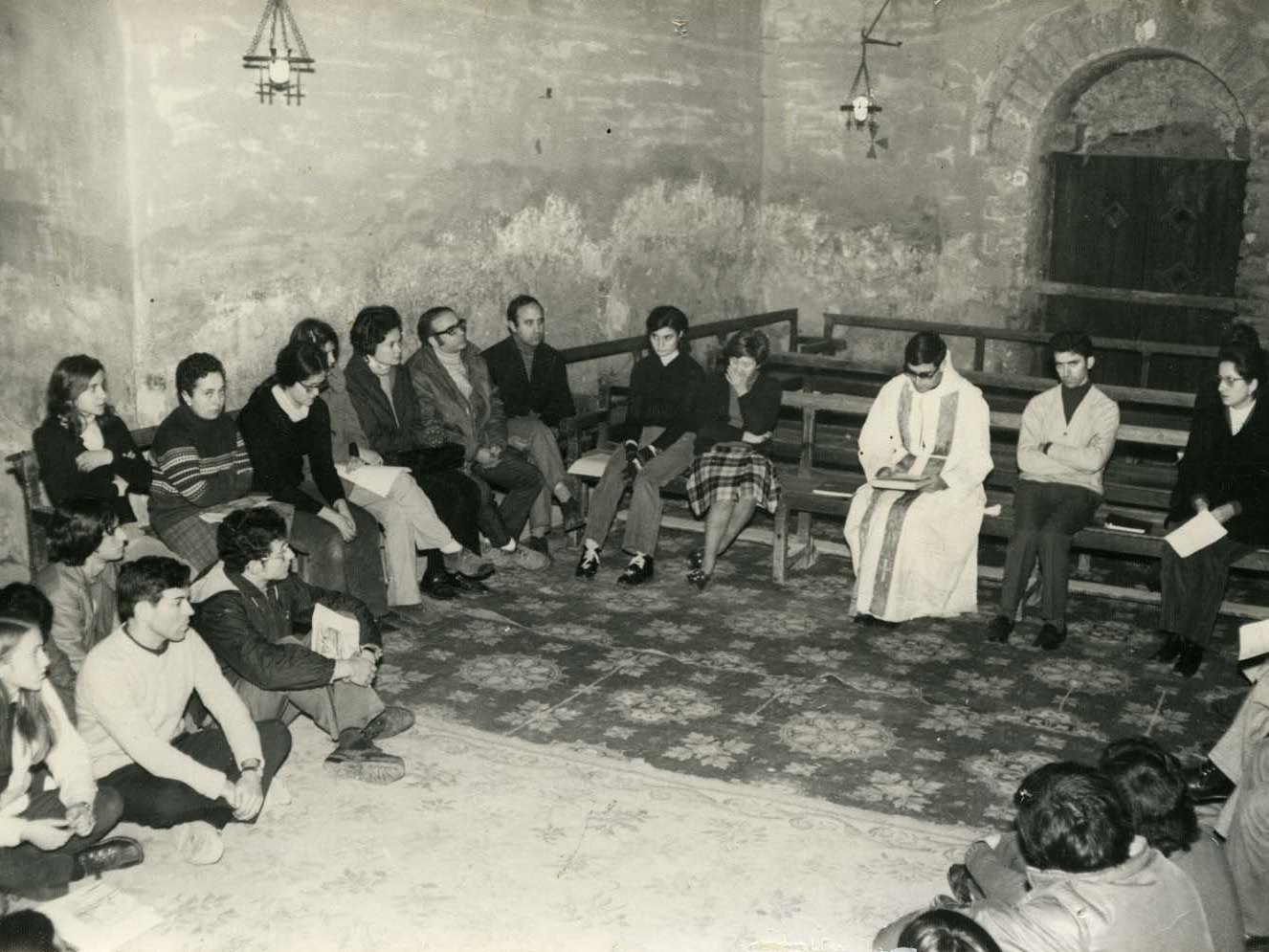
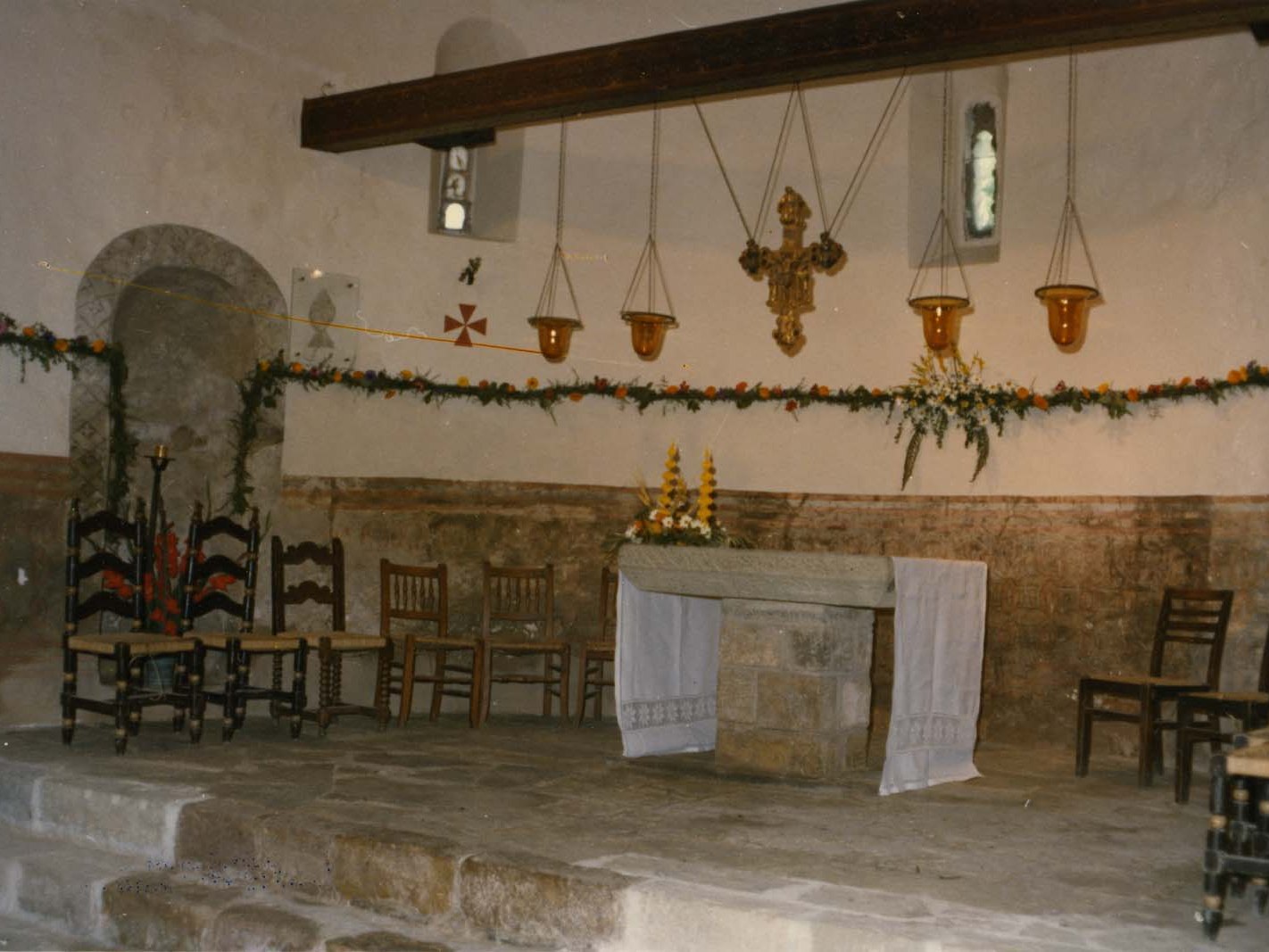
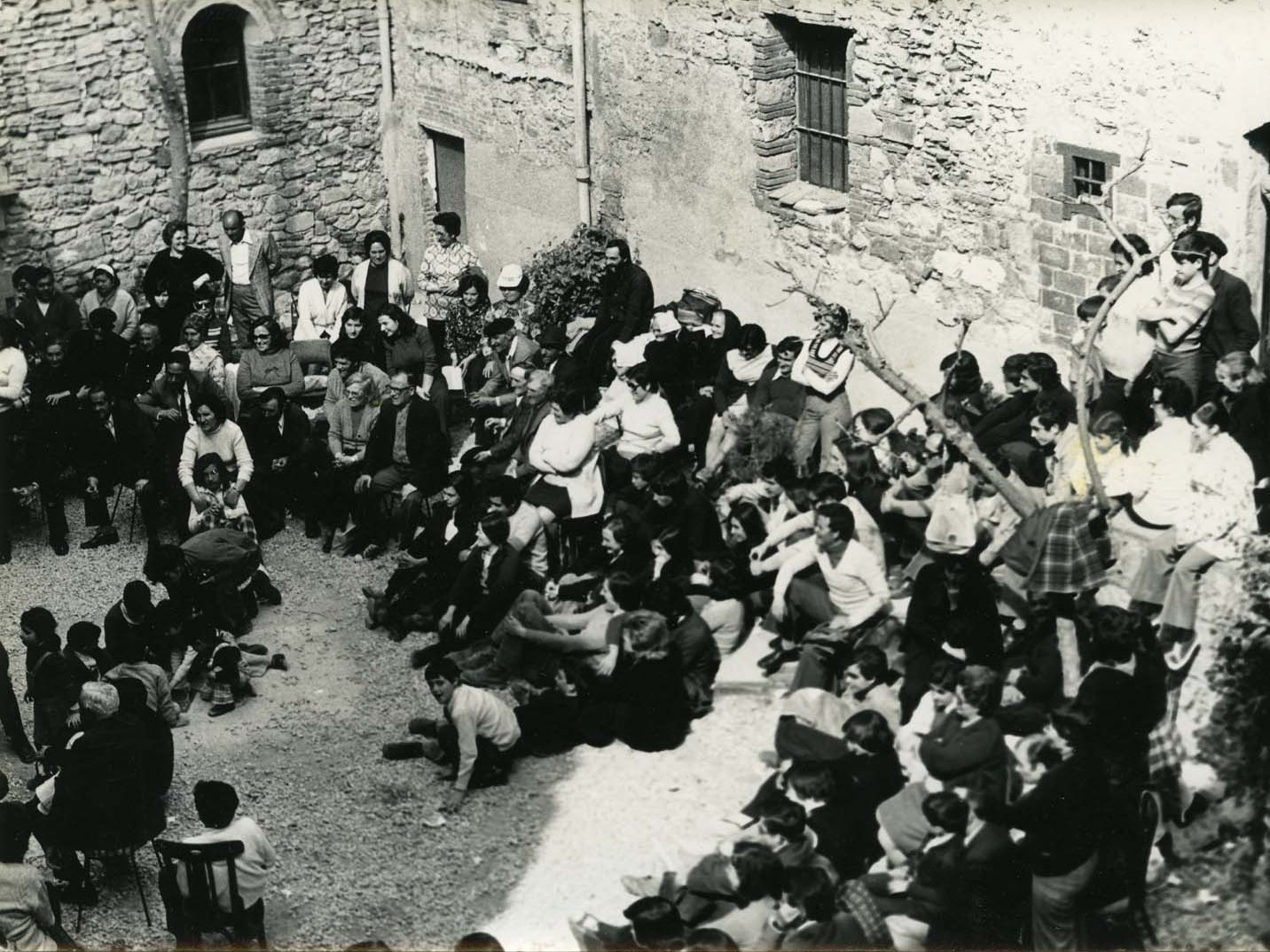
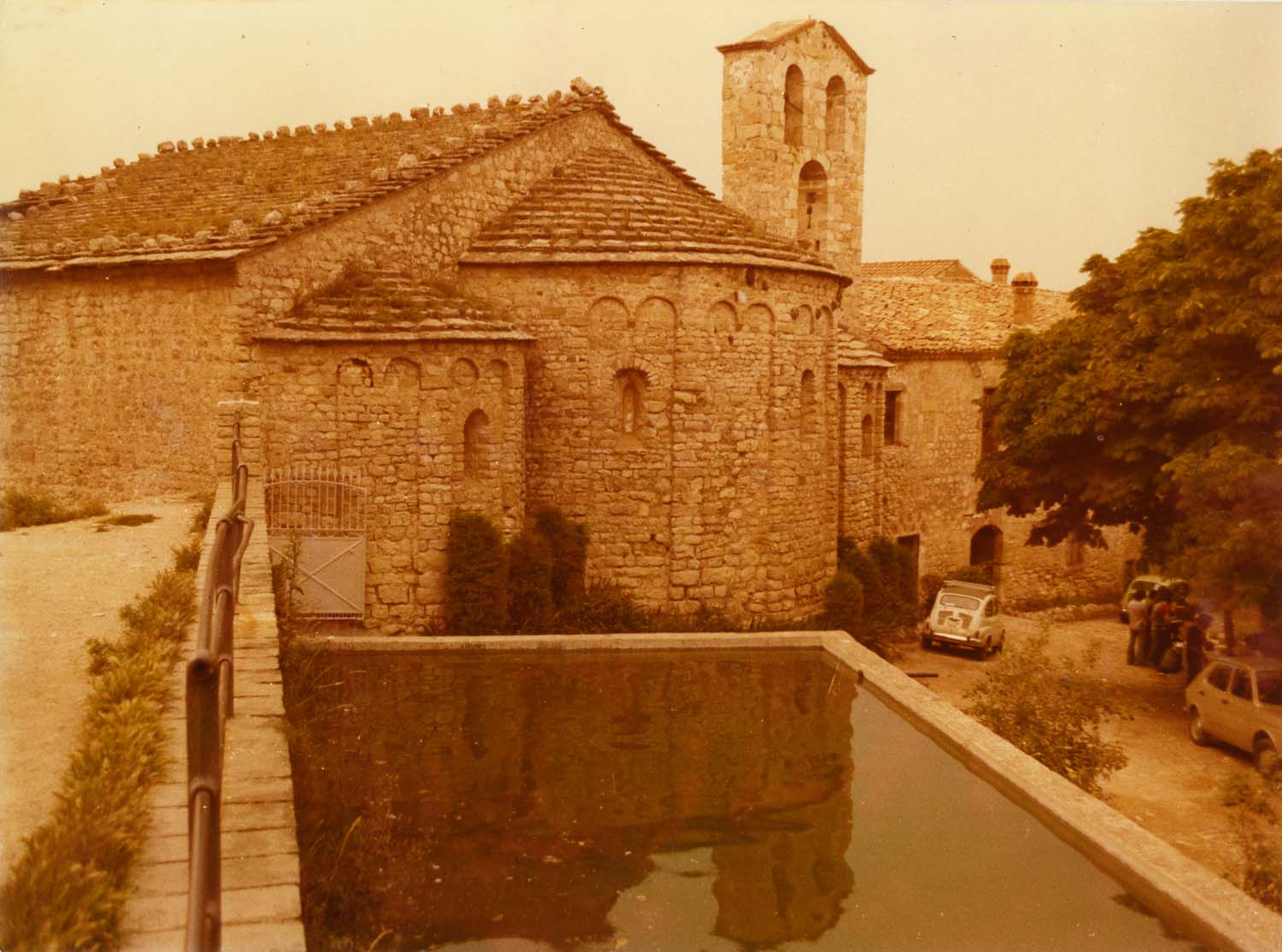
Activities at Santa Cecília in the 70s