

More than one person might think that the Sean Scully Institute of Art and Spirituality, promoted by the Museum of Montserrat, is just another idea among many similar ones that have emerged in the context of postmodernity; that the pairing of Art and Spirituality is merely a fashion, a passing fever that will affect thinking about art for a time, until another intellectual current comes along and displaces it.
It is certainly true that, in the development of aesthetic ideas, nothing is immutable or eternal, because art is alive and life means movement and growth. Yet let me say that the pairing of 'Art and Spirituality', although it may find expression in forms that become fashionable and later fade, fundamentally brings together two concepts that are intrinsically connected, so much so that they constitute a constant running through the entire history of art.
Rather than dwell on this at length, I would simply like to invite you to consider the reflections on this subject made more than a hundred years ago by Wassily Kandinsky (Moscow, 1866 – Neuilly-sur-Seine, 1944), the great 'inventor' of abstract art.
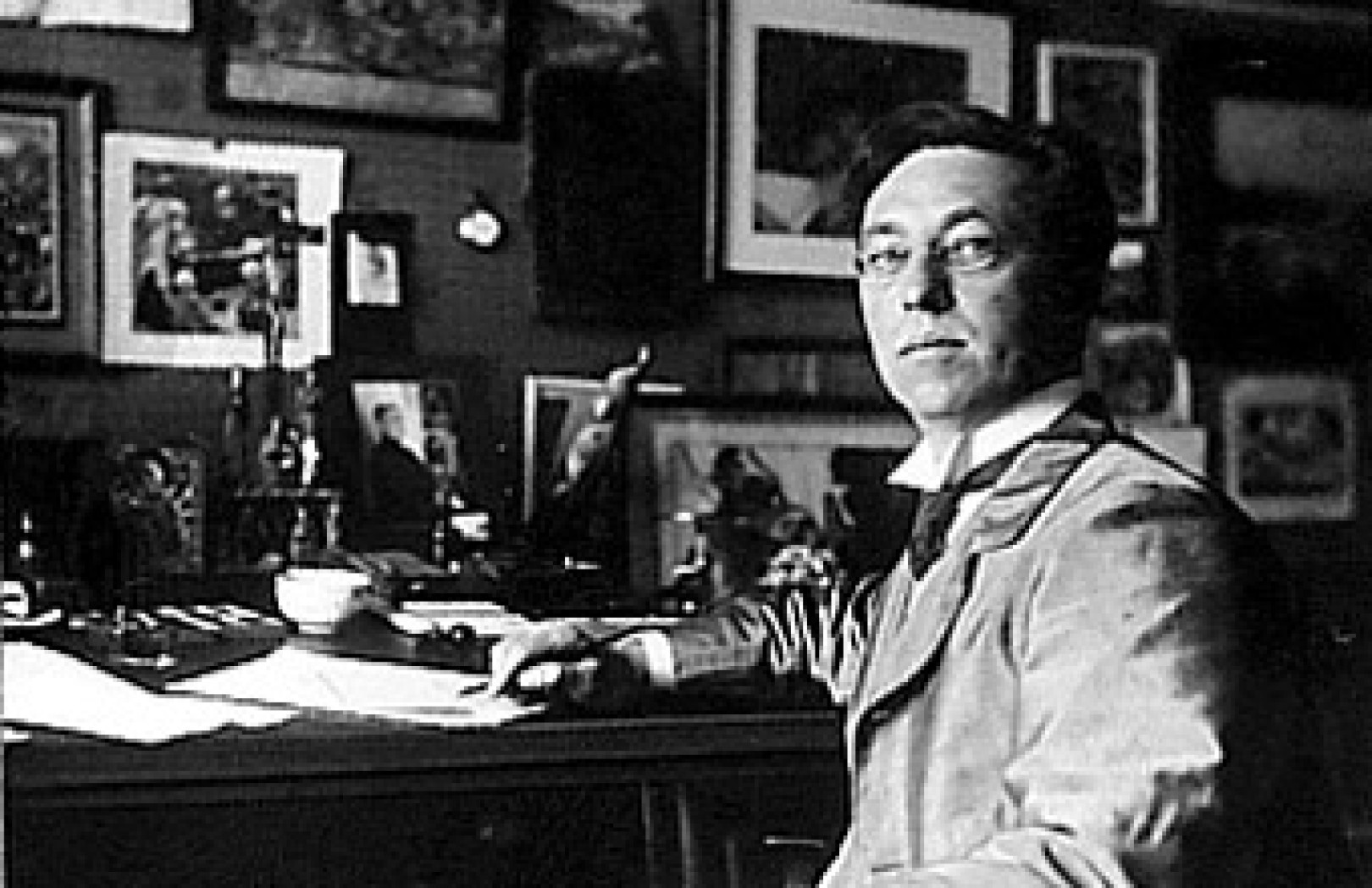
A journey between Russia and Europe
Kandinsky's Russian soul pulses through every one of his works. He receives artistic training in Odessa, Moscow and Munich. He becomes enthusiastic about French Fauvism, which he wanted to introduce into the artistic circles he frequented. He was a founding member of the Der Blaue Reiter movement, a leading exponent of German Expressionism.
When the First World War broke out, he returned to Russia and experienced the October Revolution of 1917 intensely. Once the Soviet was established, he came to hold responsibilities in education and the promotion of art. Disagreement with other artists, who advocated Soviet monumental propaganda, took him back to Germany, where he played an important role in the Bauhaus, the most avant-garde artistic movement of the time, until the advent of the Third Reich and the Nazi regime; he then settles in Paris, where he died shortly afterwards. I offer these brief biographical sketches to place him in his historical context for those who are less familiar with him.
The spiritual dimension of art
Kandinsky published his book Über das Geistige in der Kunst (Concerning the Spiritual in Art) in 1912, and two editions sold out that same year. What is this book, and what was it about, that it achieved such success? From the beginning of the century, Kandinsky had been jotting down thoughts on art that he considered worth remembering in a notebook, and the book we are discussing emerged from this carefully organised material. The author himself explains the aim he had in mind for artistic education:
"awakening the ability to perceive the spiritual dimension in material and abstract things is a faculty absolutely essential for the future, making countless experiences possible".
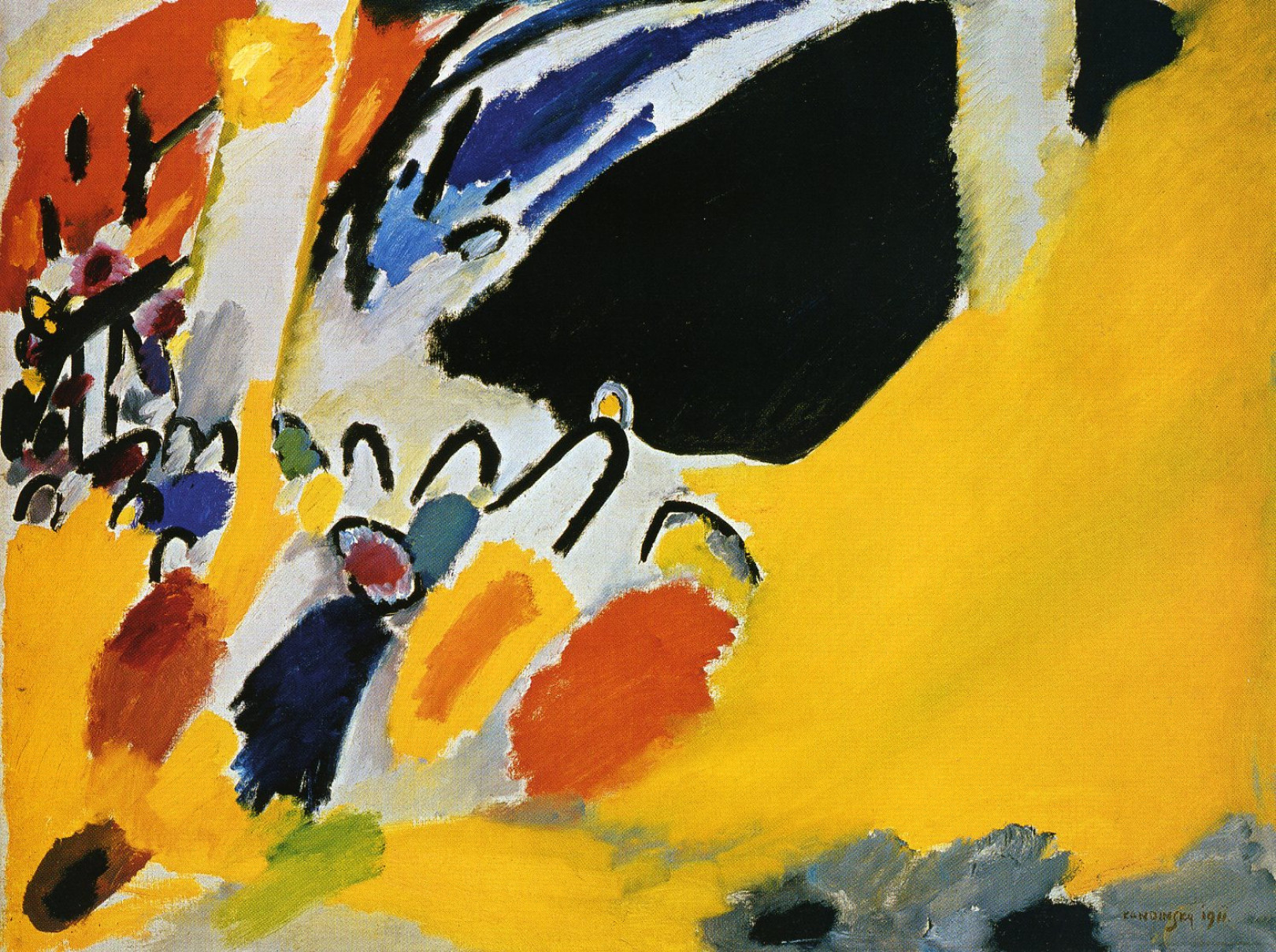
Städtische Galerie im Lenbachhaus, Munich.
This idea would become a leitmotif for him, one that he would repeat in a thousand different ways; in Point and Line to Plane, published during his Bauhaus years in 1926, he wrote:
"Not everything is visible and comprehensible or, to put it another way, beneath what is visible and comprehensible lies what is invisible and incomprehensible. We stand on the threshold of an era and of a path, just one, that will lead us towards depths we are only gradually beginning to perceive".
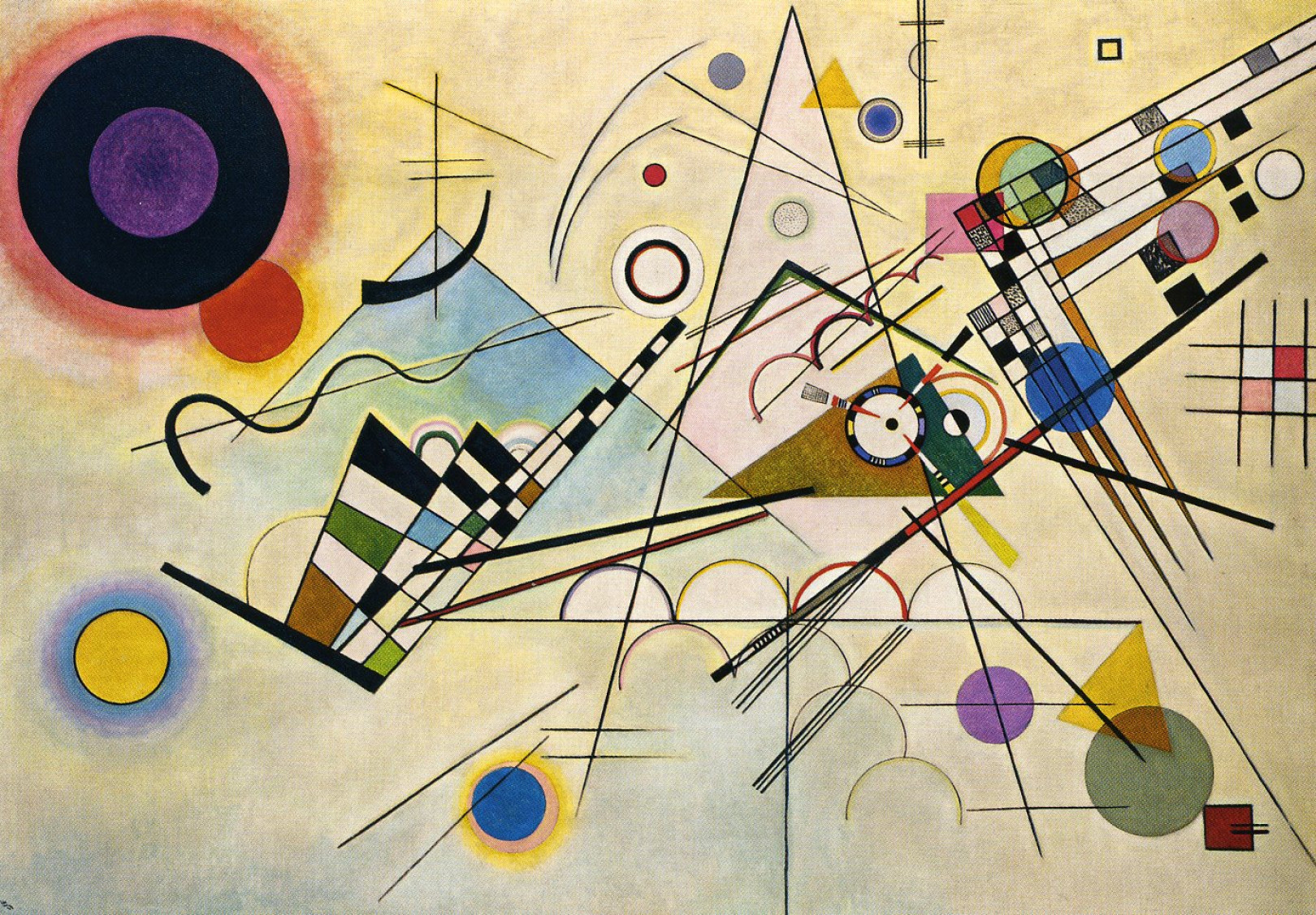
Guggenheim, New York.
Towards a new pictorial language
Kandinsky was one of those charismatic Russian figures, with the soul of a prophet, who look back to Tolstoy, albeit with notable differences. Kandinsky's thought is not systematic: it does not advance progressively, but expresses itself through concentric circles. To understand him fruitfully, one must read him with a sympathetic yet critical attitude.
His book Concerning the Spiritual in Art is full of suggestive and illuminating statements, but also of unconvincing hypotheses, sometimes arising from his adherence — itself highly qualified — to Theosophia. His theory of the mystical symbolism of each colour is famous: arbitrary and subjective, yet suggestive. These theoretical speculations coincided with his first abstract works. There is no doubt that, through these writings and his first abstract works before the Great War, Kandinsky was 'prophetically' preparing the way and opening paths towards an unforeseen future. In the book we are discussing, he says:
"The conscious artist is not content to copy a material object faithfully, as though he were a photographic lens; he tries to 'idealise' it by excluding unnecessary details, to stylise it, an operation that will be given another name tomorrow. In art, copying is useless.
This desire to concentrate on expression is the starting point for the artist to advance towards purely artistic objectives, that is, strictly pictorial ones. The artist sets aside the 'literary' subject and concentrates strictly on the composition of the entire painting, creating forms that interrelate and combine, subordinating them to the overall composition".
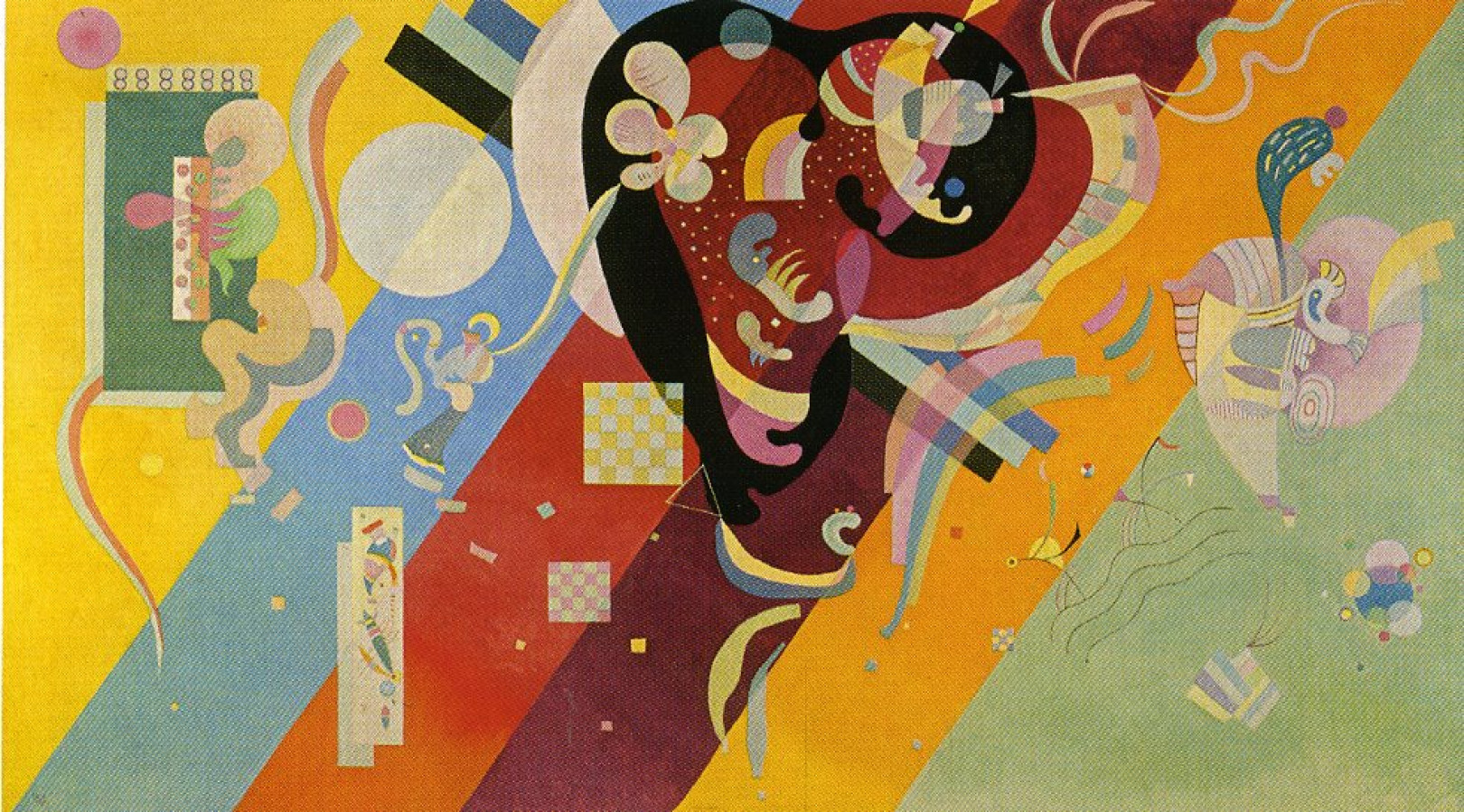
Centre Pompidou, Paris.
Kandinsky's great contribution to the history of painting and art consisted in discarding the concept of art as an institutionalised, historical discipline or doctrine, and conceiving of art as a purely aesthetic, spiritual activity, as intersubjective communication, making free subjectivity the fundamental element of art, so that this choice becomes a way of existing and acting. With Kandinsky, an important part of the thought of the great Romantic writer Friedrich Schiller enters the twentieth century.